Science
A pulse, read from light.
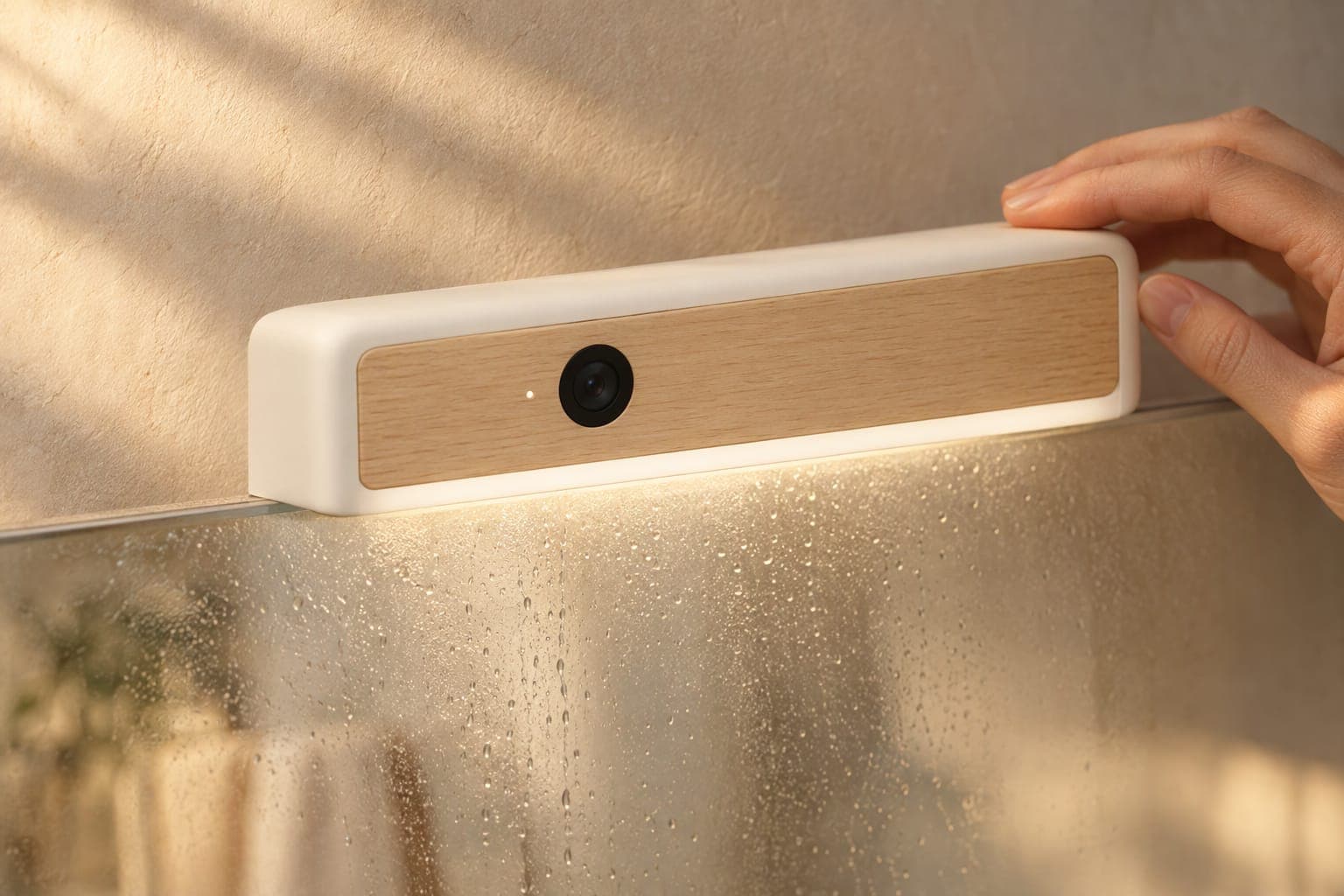
Your heart leaves a trace in the color of your face. Karla's camera reads it while you brush. Here's how that works and how we test it.
The method
Reading a face
Each heartbeat pushes blood into the skin of your face and changes its color by an amount too small to see. A camera can read it. It's called remote photoplethysmography, or rPPG.
Breathing shows in the rise and fall of your head and in the pulse signal itself. From these Karla measures your pulse, breathing and heart rate variability.
The rig
Our own capture rig
We built our own camera rig, firmware and software. They record face video in sync with standard medical reference devices for ECG and EEG.
That gives every recording two sides to compare: what the camera reads and what the reference devices record at the same moment.
The test
Compared with ECG
Pulse, breathing and HRV from the camera were compared with the medical references, including ECG, on 25 people.
25 people tested against medical references
Two tags
Measured or estimated
Every reading wears one of two tags, so you always know where it comes from.
- Measured
Read from the camera's signal, like your pulse, breathing and HRV.
- Estimated
Modeled from measured signals, like a stress score from your heart rate and HRV. Best read as a trend over weeks.
Open source
Karla Health is open source
The capture app, Karla Health, is open source.
One for your mirror?
A 49 USD deposit holds your Karla. It's refundable any time before Karla ships in 2027, and we'll announce the final price before shipping.
Soma doesn't diagnose. It notices change and points you to a doctor.