A county scanned 7,135 hearts. Most had findings.
A Florida county paid for heart CT scans for residents with risk factors but no symptoms. More than half of the 7,135 people screened had abnormal results, and the share climbed steeply with age.
Soma Labs3 min read
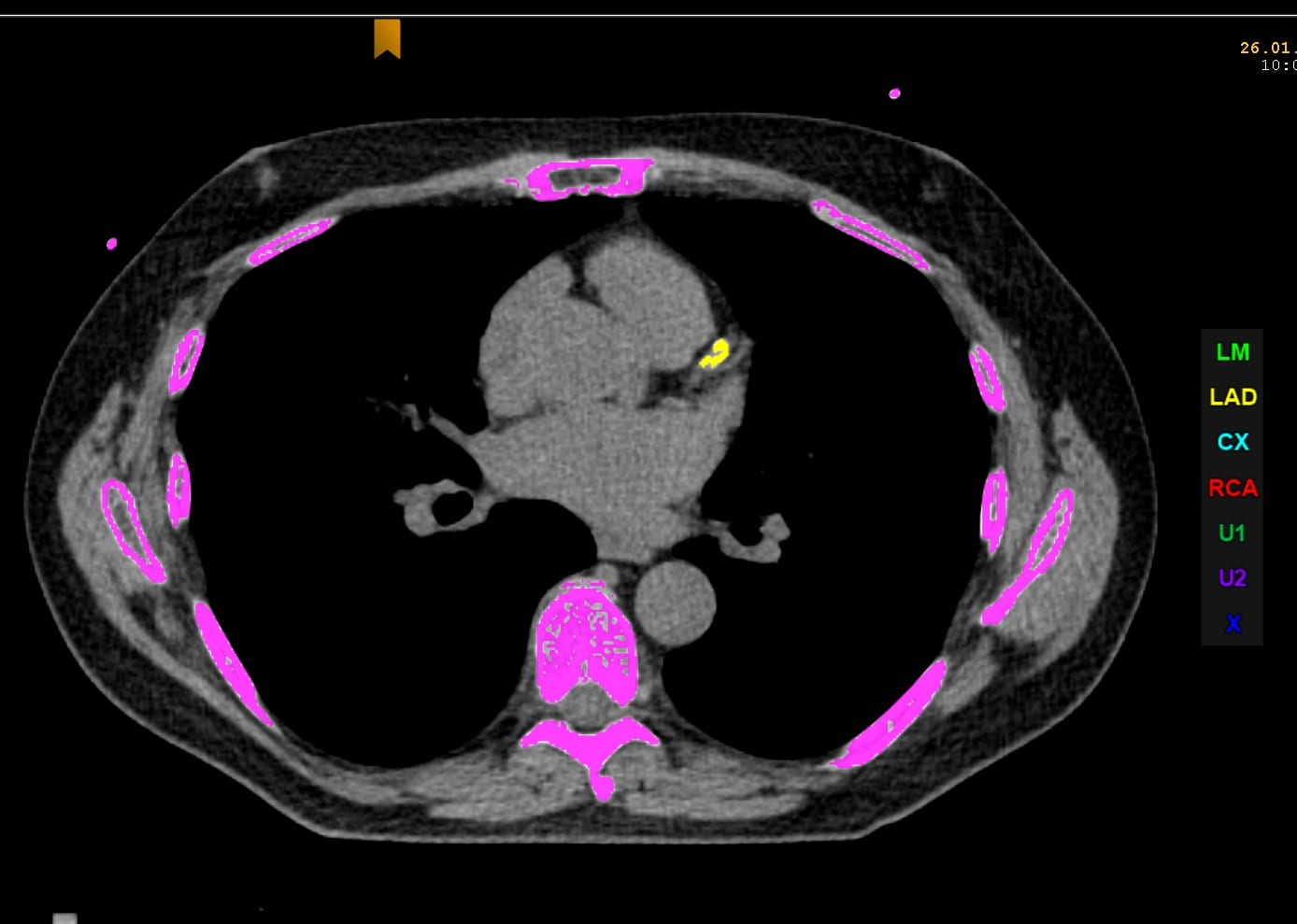
Most people with a risk factor for heart disease, like high blood pressure or high cholesterol, never get a look at their arteries until something goes wrong. Broward County in Florida tried something different. From May 2023 to September 2025, it paid for heart CT scans for residents who had risk factors but no symptoms and no known heart disease.
A preprint posted on October 14 by researchers at Cleveland Clinic Florida describes what the first phase found. It hasn't been peer reviewed yet.
How the program worked
Residents applied through a county website. To qualify, they needed health insurance, had to be 45 to 70 years old with limited exceptions, have at least one risk factor and no known heart disease or symptoms. The scan, either a coronary CT angiogram or a calcium score, was offered at no cost at six hospitals in four health systems.
The program team sorted each result into three groups: normal, abnormal or very abnormal.
What the scans showed
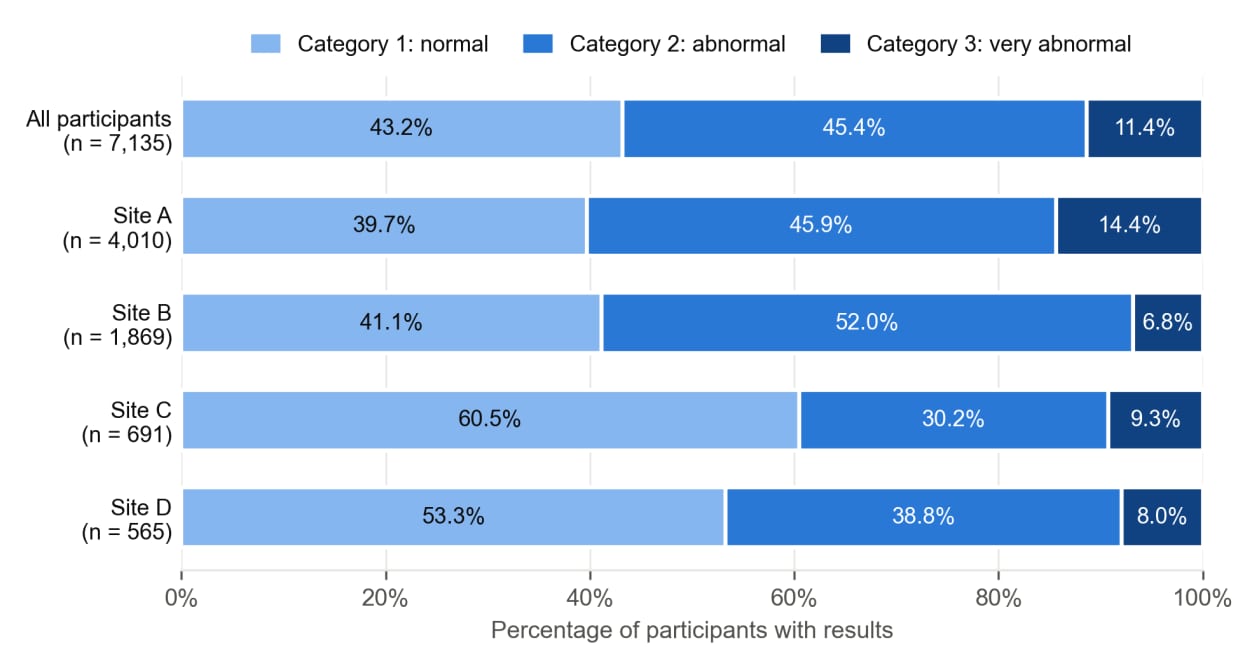
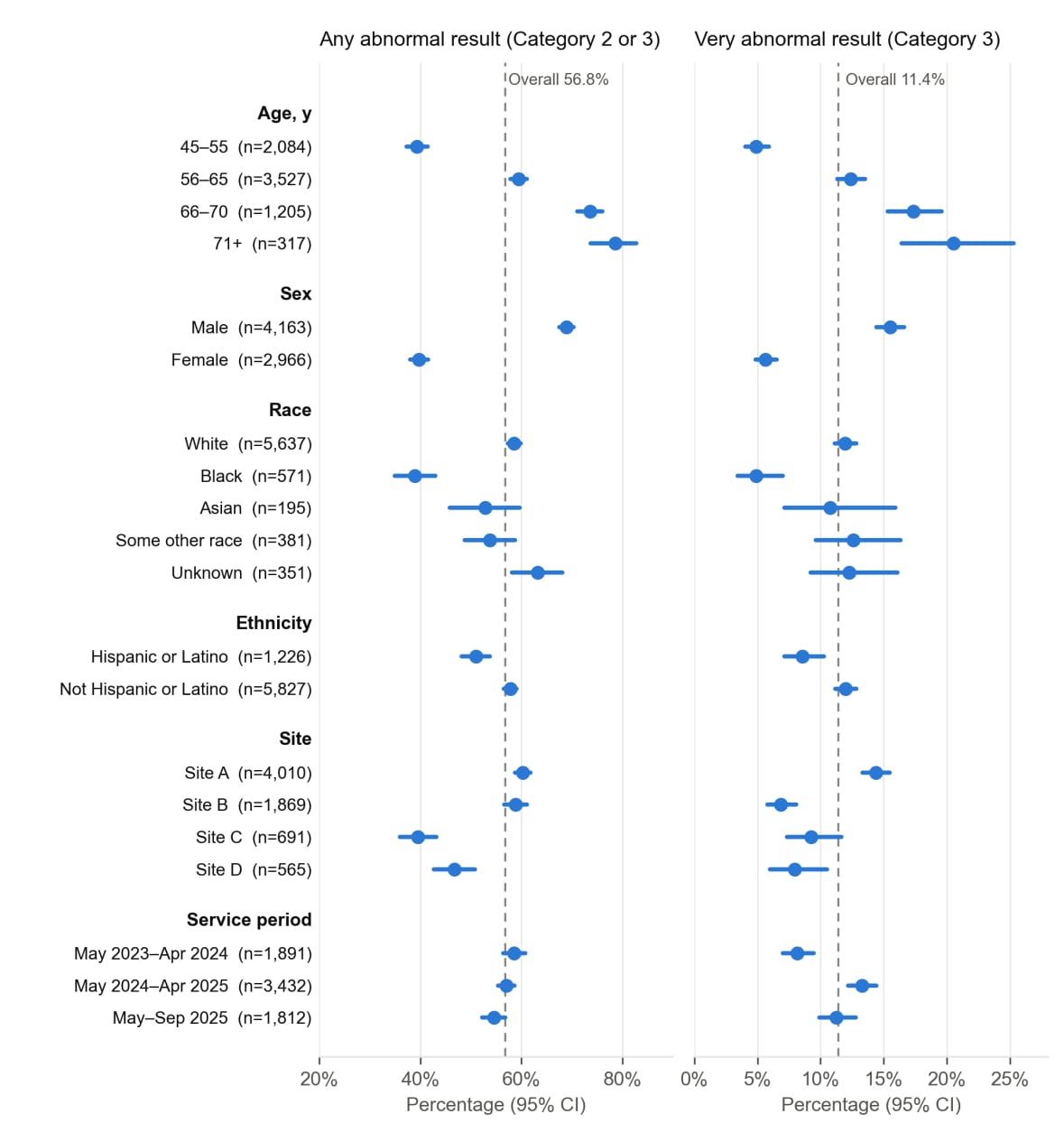
Among 7,135 participants, 43.2% had normal results, 45.4% abnormal and 11.4% very abnormal. In other words, 56.8% had abnormal or very abnormal findings.
Age made a large difference. The share with abnormal results rose from 39.3% among people aged 45 to 55 to 78.5% among those 71 or older. It was 68.9% in men and 39.8% in women. Rates were lower among Black participants than white participants, and among Hispanic than non-Hispanic participants.
The results also varied by health system, from 39.5% to 60.3% abnormal, which the authors couldn't fully explain. Differences between the 50 busiest ZIP codes were no larger than chance would produce.
What it doesn't tell us yet
The analysis uses the program's aggregate reports, so it describes findings, not outcomes. It doesn't say what happened to people after an abnormal scan, whether treatment changed, or whether anyone avoided a heart attack. "Abnormal" also covers a wide range, from a little plaque to significant narrowing.
The authors note that Black, Hispanic and female residents were under-represented compared with the county's population, and only insured residents could take part. The variation between health systems suggests the same scan may be read differently in different places.
Whether CT screening of people without symptoms is worth it is an open question in medicine, with radiation, cost and follow-up testing on one side and earlier detection on the other. This study doesn't settle it. Anyone wondering about their own heart risk should talk to a clinician.
Where Soma fits
The striking part for us is how much was there to see in people who felt fine. It's a reminder that feeling well and being measured well aren't the same thing.
Soma doesn't scan arteries and it doesn't diagnose. Soma Axon, the pod we're still building, is a general wellness product designed to take the same readings the same way each week, so slow changes become visible against your own baseline, each value with its margin of error. If something keeps looking off, Soma will suggest you see a clinician. The same instrument, every week explains the idea.
Sources, as of October 16, 2026: Lewis, Estep, Baran and Ross, Results of a Community-Based Coronary CT Angiography Screening in Asymptomatic Adults With Cardiovascular Risk Factors: The Broward County Heart Project, medRxiv preprint, not yet peer reviewed (October 14, 2026), CC BY 4.0. This post describes research and isn't medical advice.