Irregular sleep timing tracks with higher mortality
In 7,604 US adults who wore wrist trackers for up to a week, those whose bedtimes and sleep midpoints shifted more from night to night had a higher risk of death over about seven years. It's an association, measured over a few days.
Soma Labs3 min read
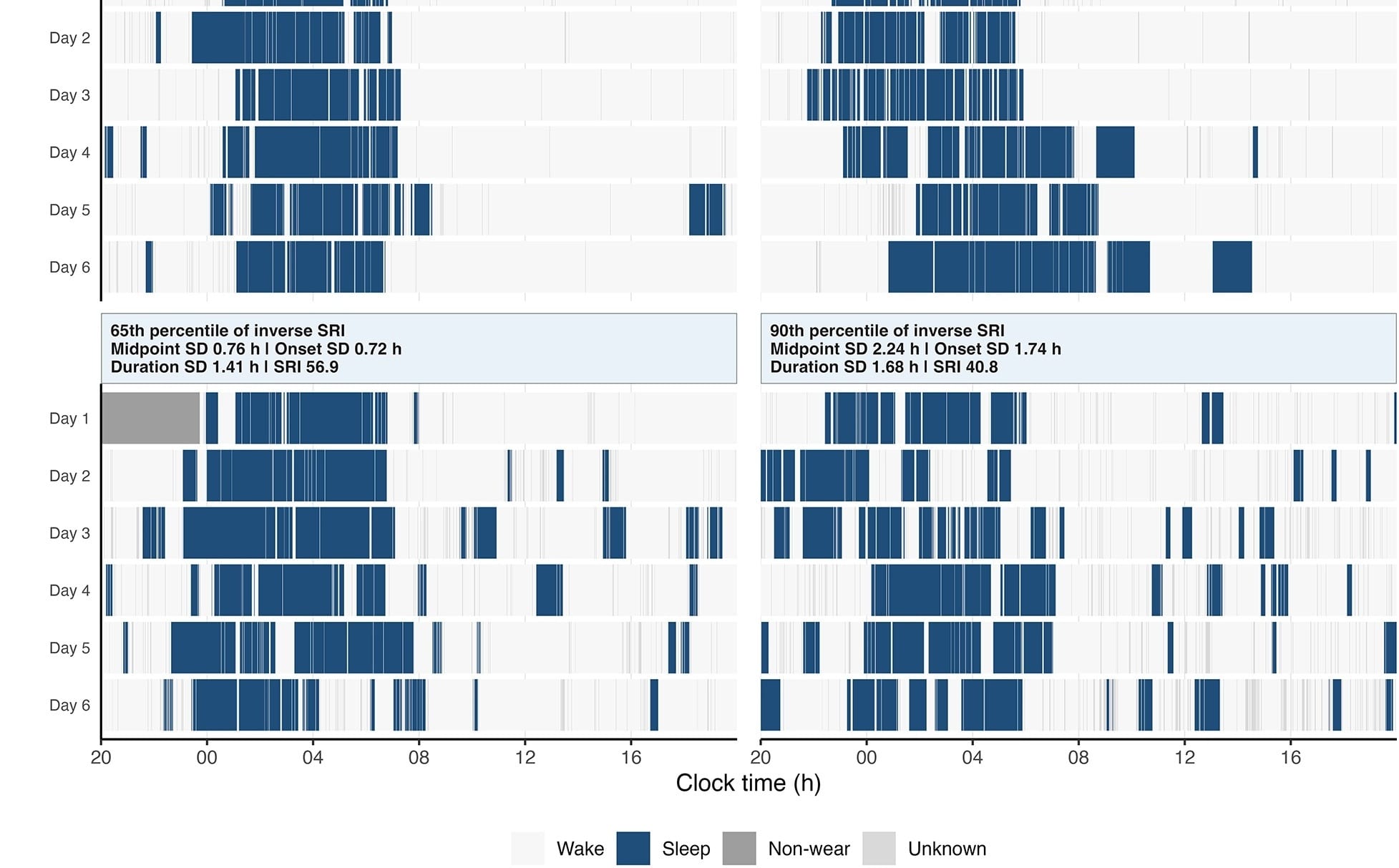
Sleep advice usually focuses on how long you sleep. A study published on September 29 in Frontiers in Medicine looks at something else: how much your sleep timing moves around from one night to the next.
What the researchers did
The team, from Taiyuan Central Hospital in China, used data from the US National Health and Nutrition Examination Survey, known as NHANES. Between 2011 and 2014, participants wore a wrist accelerometer that recorded movement day and night. The researchers kept 7,604 adults aged 20 and older who had at least four valid days of data, including a weekend day.
From those recordings they estimated, for each person, how much bedtime, the midpoint of sleep and total sleep time varied across nights. They also computed a sleep regularity index, which captures how similar one day's sleep-wake pattern is to the next. They then linked participants to national death records through 2019, a median follow-up of about seven years. In that time there were 714 deaths, 229 of them from cardiovascular disease.
What they found
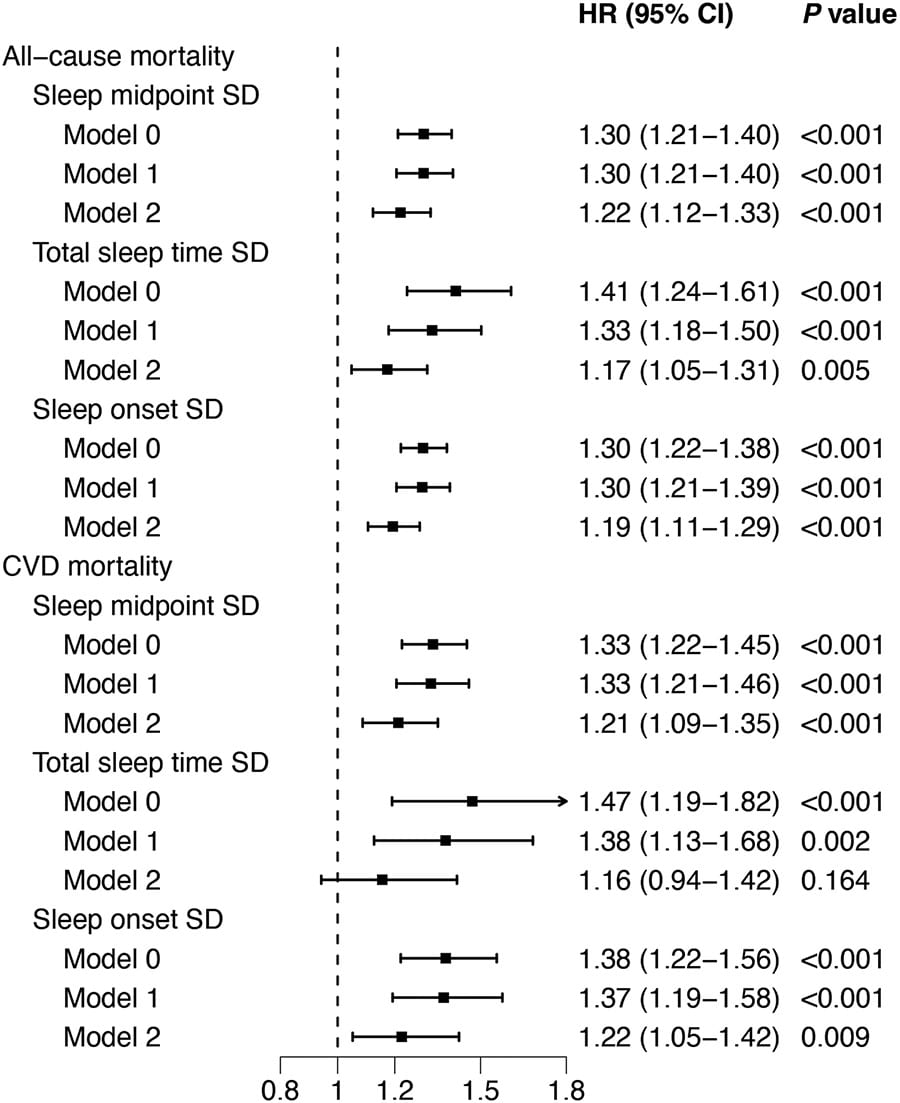
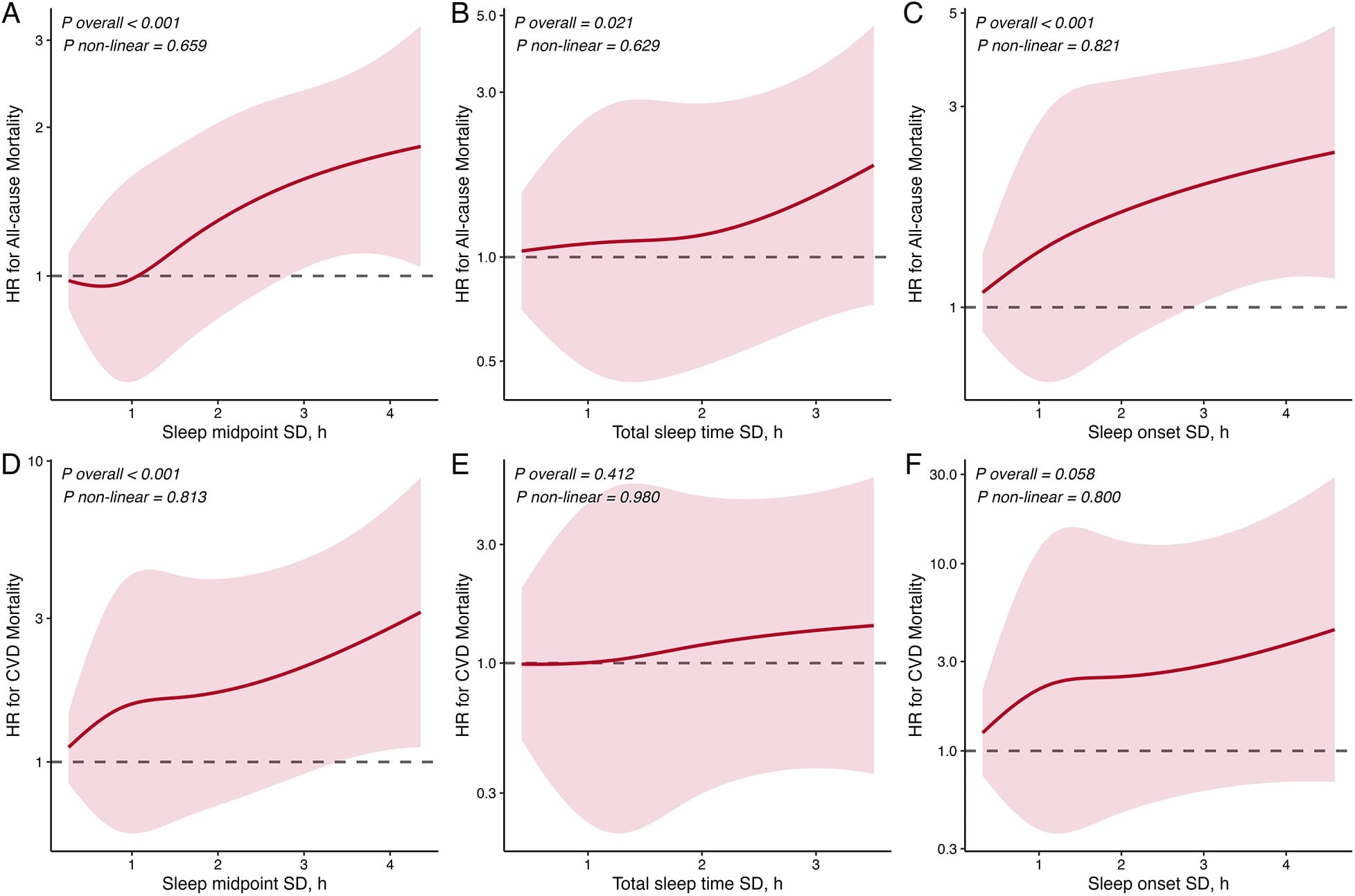
After adjusting for other factors, each extra hour of night-to-night variation in the sleep midpoint went with a 22% higher risk of death from any cause and 21% higher risk of cardiovascular death. Variation in bedtime showed similar links. A 10-point lower sleep regularity score went with about 29% higher risk of death from any cause and 31% higher cardiovascular risk.
Variation in total sleep time was linked to death from any cause, but its link to cardiovascular death wasn't statistically clear. The authors also note that age, high blood pressure and diabetes had larger effects in the same models than the sleep measures did.
The paper also includes a small lab experiment on blood vessel cells exposed to regular and irregular schedules. That part used cultured cells, not people, and the authors list its limits.
What it doesn't show
This is an observational study. Irregular sleep may be a marker of other things, like shift work, sleep apnea, depression or illness, rather than a cause, and the authors say reverse causation and confounding can't be ruled out. Sleep was estimated from four to seven days of wrist data, which can miss what's typical for a person. The number of cardiovascular deaths was modest, which limits precision.
It isn't advice to change anything. Anyone worried about their sleep or their heart should talk to a clinician.
Where Soma fits
The idea we take from this is that regularity can be its own signal. Two people can sleep the same number of hours on average, with very different patterns underneath.
Soma doesn't track sleep and it doesn't diagnose. Soma Axon, the pod we're still building, is designed around regularity of a different kind: the same readings, in the same conditions, once a week, with someone from Soma asking how you slept before each visit so a short night gets noted next to the numbers. Every value will come with its margin of error. The same instrument, every week explains the idea.
Sources, as of October 16, 2026: Bai, Chen, Cui and Yang, Night-to-night sleep variability and all-cause and cardiovascular mortality, Frontiers in Medicine (September 29, 2026), open access under CC BY 4.0. This post describes research and isn't medical advice.