Walking with a robotic assist: an 8-week trial in older adults finds gains in pace and confidence
Sixty adults aged 60 to 75 in China were randomized to walk with or without a lower-limb exoskeleton three times a week. The assisted group walked faster and steadier and felt the work was easier, though participants knew which group they were in.
Soma Labs3 min read
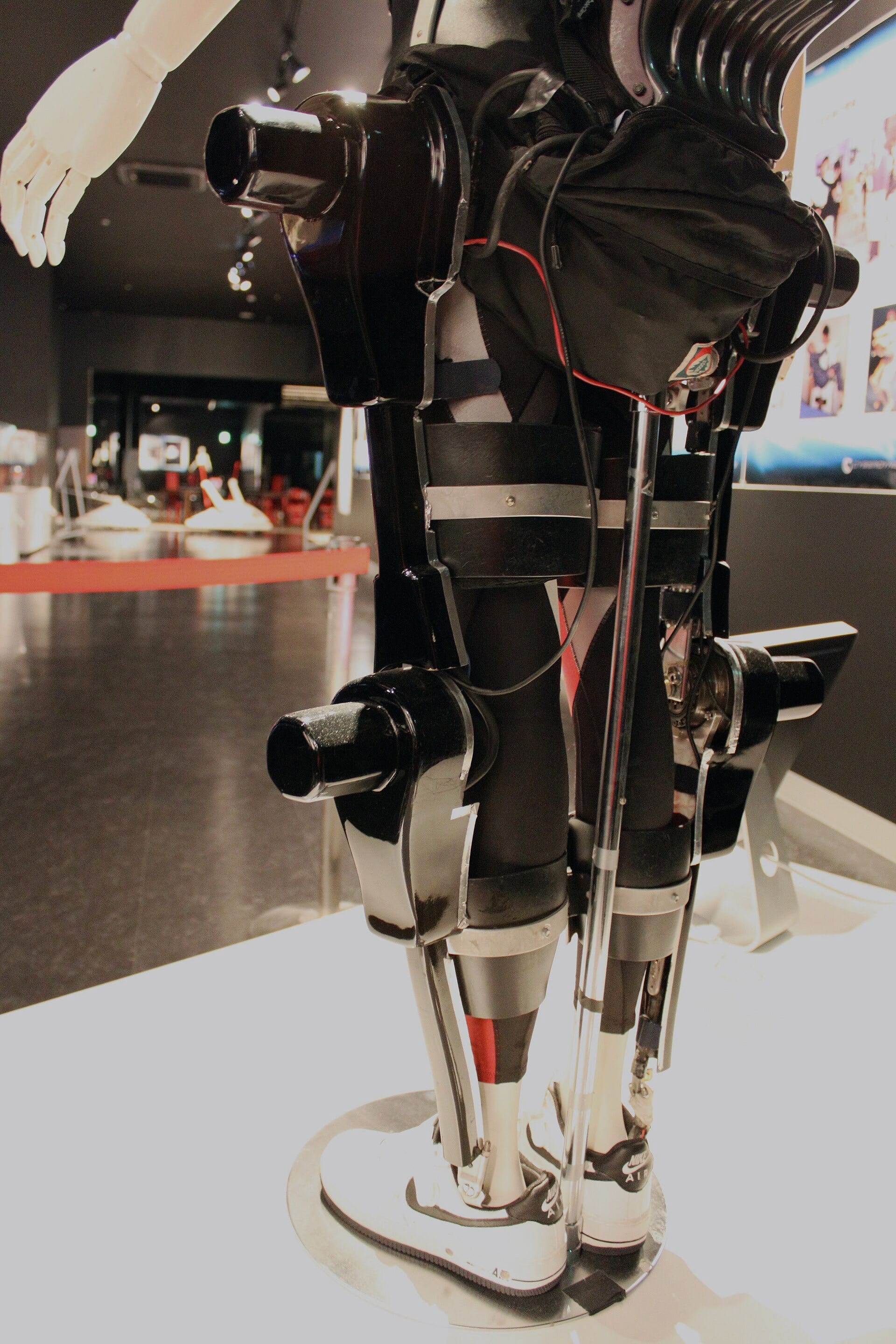
Exoskeletons used to look like science fiction. Today, lighter models that strap to the hips and legs are being tested as walking aids for everyday exercise. A new trial asks a simple question about older adults who are already healthy: does walking with one change how they move, and how they feel about moving?
Over eight weeks, people who trained with the device walked faster, took longer and steadier steps, and rated the same effort as easier. The authors argue that the mental side, feeling capable, carried a good share of the gains.
The setup
Changjian Wang of Huaibei Institute of Technology and Tianyou Zhang of Henan University's Wushu College recruited healthy, community-dwelling adults aged 60 to 75 from three neighbourhoods in one Chinese city. Sixty were randomized, 30 per group, and 58 finished.
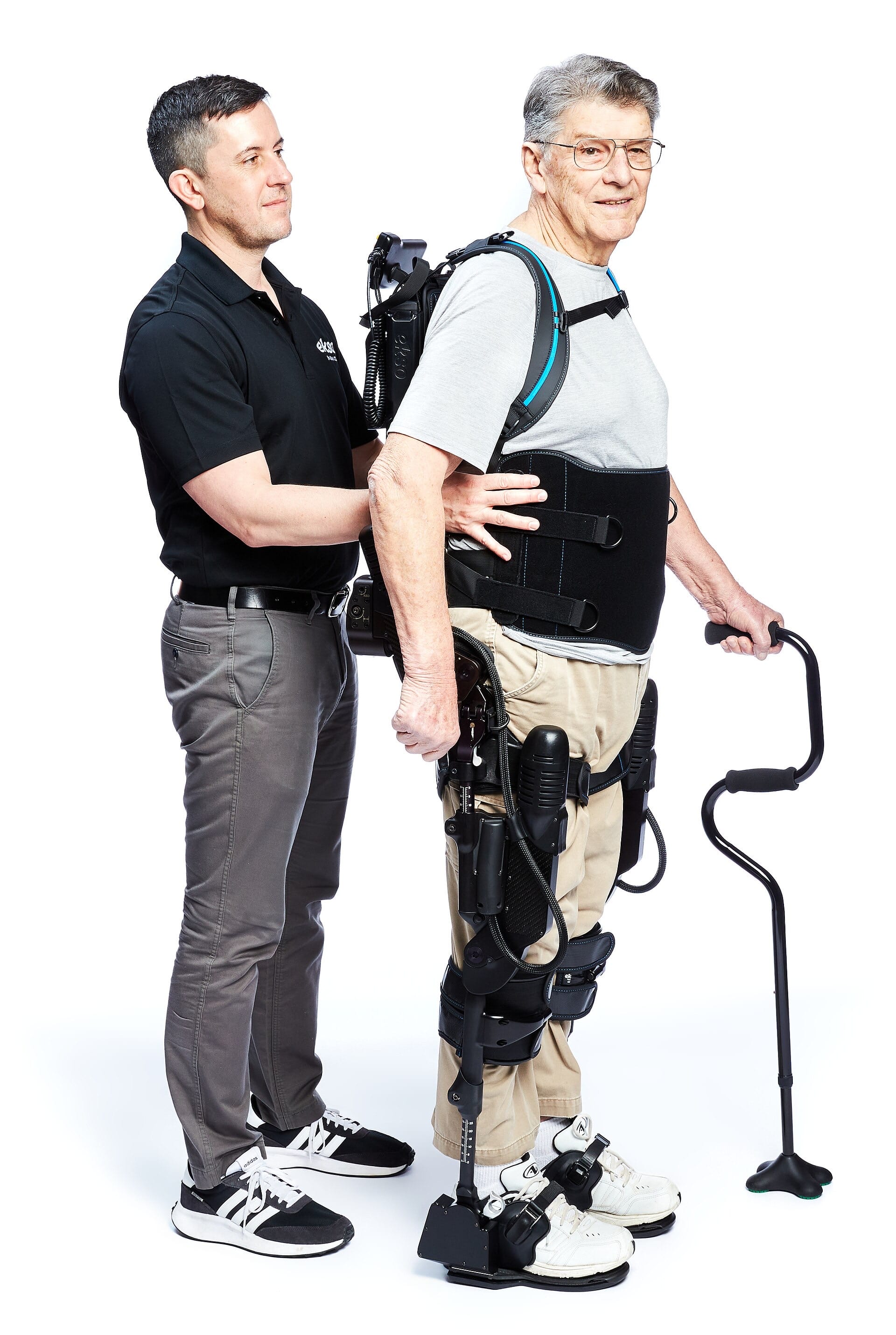
Both groups trained three times a week for 40 minutes: a warm-up, 25 minutes of steady walking and rhythmic stepping on flat ground, and a cool-down. Walking speed was raised gradually from about 0.7 to just over 1 metre per second. One group wore a lower-limb walking exoskeleton (the Aider3S, from Chengdu Buffalo Robot Technology). The other did the same exercise, at the same duration and intensity, without it. Both groups also attended the same weekly exercise education session.
Near the end, the device's assistance was turned down so participants did more of the work themselves. The team also interviewed 12 people from the exoskeleton group about their experience.
What the trial found
After eight weeks, the exoskeleton group improved on every measure, while the comparison group barely moved:
- Walking speed went from 0.82 to 1.03 metres per second (comparison group: 0.81 to 0.83).
- Six-minute walk rose from about 327 to 389 metres (comparison group: about 325 to 332).
- Step-to-step variability fell from 18.5% to 12.4%, and balance sway dropped too.
- Perceived effort on the Borg scale fell from 13.5 to 8.3, while exercise confidence and balance confidence scores rose sharply.
A statistical mediation analysis suggested that feeling less strain, which built confidence, accounted for about 28% of the effect on physical performance. In interviews, several participants said they kept a more positive attitude to walking even after taking the device off.

What to keep in mind
Nobody was blind to the device. Participants knew whether they wore an exoskeleton, so expectations may have shaped both their effort and their self-ratings. The people running the tests and the statistician were kept unaware of group assignment, which helps on the measured outcomes.
Small and specific. Fifty-eight healthy adults from one city, followed for eight weeks with no follow-up after training ended. The authors note the study may be underpowered and didn't include people with limited mobility.
Surprisingly flat comparison group. The group that did the same walking without the device showed almost no change, which is unusual for eight weeks of regular exercise and worth checking in future trials.
The study was sponsored by the Anhui Department of Education, and the authors declared no commercial conflicts.
Where Soma fits
Soma doesn't make exoskeletons, and the app, which is not yet available, doesn't measure walking speed or balance. The useful idea here is about motivation: when exercise feels manageable, people are more willing to keep at it. Paying attention to how hard something feels, not just what the numbers say, is one way to notice that shift over time.
Sources, as of November 10, 2026: Changjian Wang and Tianyou Zhang, "Empirical study on how lower limb exoskeleton robots improve older adults' physical performance through psychological mechanisms," Frontiers in Psychology, doi 10.3389/fpsyg.2026.1980345, published under CC BY 4.0. This post describes research and isn't medical advice.