Older adults who go online tend to score higher on thinking tests. The why is still open
A review of 31 studies and nearly 159,000 people links internet use after 60 with better memory and thinking test scores, across social, entertainment and practical use. The studies are observational and wildly different from one another.
Soma Labs3 min read
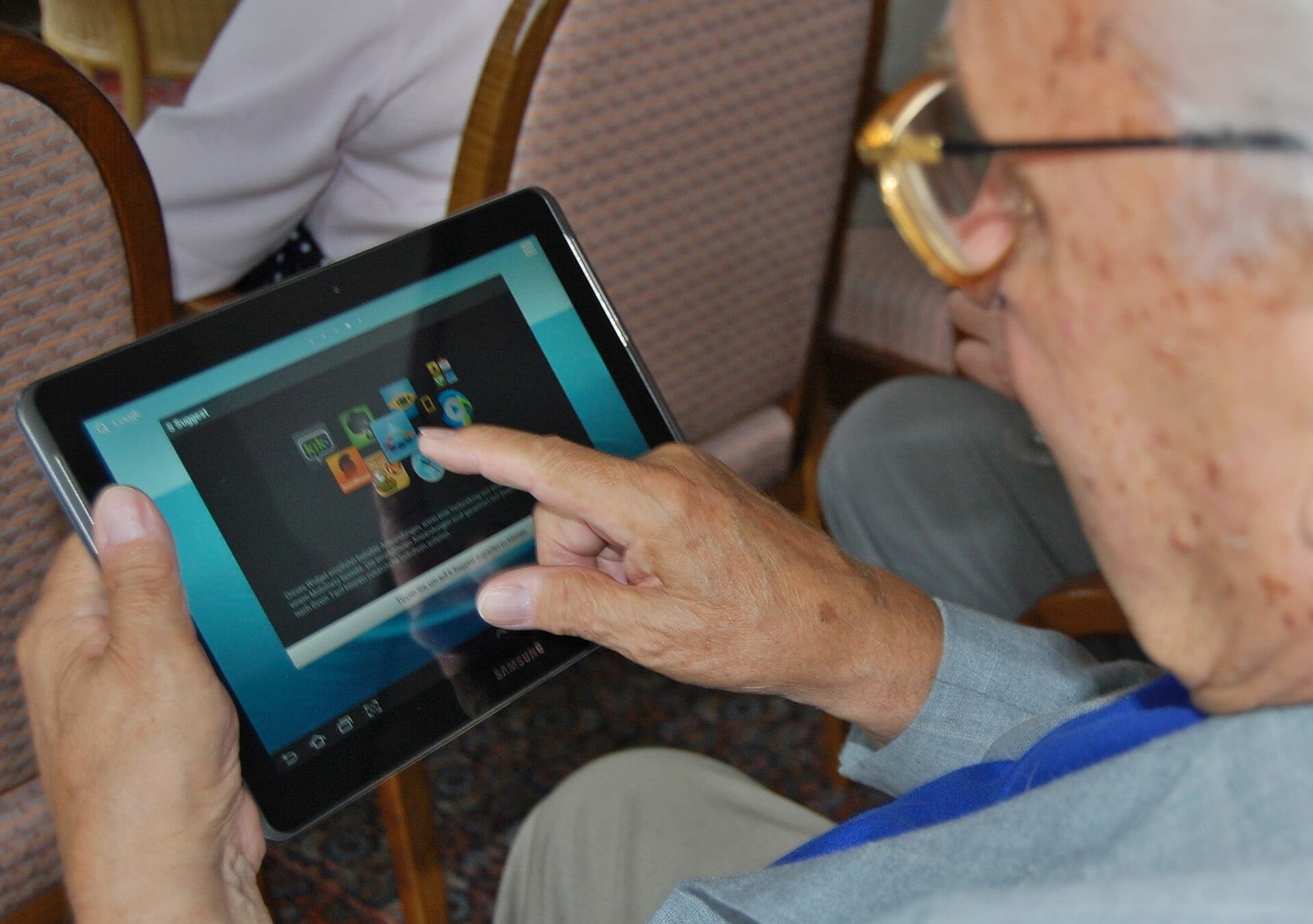
Video calls with grandchildren, online banking, a crossword app. For a lot of people over 60, the internet has become part of the daily routine. A new review asks whether older adults who use it differ on memory and thinking tests from those who don't, and whether the kind of use matters.
The short answer from the pooled data: internet users scored better, and the type of use made little difference. The longer answer is that the evidence can't yet say which way the arrow points.

The setup
A team from the School of Nursing and the hospital of Chengdu University of Traditional Chinese Medicine ran a systematic review following the PRISMA 2020 guidelines. They searched PubMed, Embase, CINAHL, PsycINFO and Web of Science through March 15, 2026.
They kept observational studies of community-dwelling older adults with a mean age of 60 or more. That included cross-sectional studies, which measure everyone once, and longitudinal studies, which follow people over time.
Thirty-one studies made the cut, covering 158,648 participants in 16 countries and regions on five continents. Fourteen came from Asia, ten of them from China. Twenty-five studies had numbers that could be pooled.
The authors also sorted internet use into three groups: instrumental (practical tasks like shopping or looking things up), social (messaging and online communities) and entertainment.
What the review found
Across the 25 pooled studies, older adults who used the internet had about 1.5 times the odds of a better result on memory and thinking measures (odds ratio 1.49, 95% confidence interval 1.31 to 1.70).
By type, the pooled estimates were 1.55 for social use, 1.46 for entertainment and 1.38 for practical use. Social use came out numerically highest, but a statistical comparison found no real difference between the three (p = 0.63). Dropping small studies and the one study rated low quality didn't change that picture much.
A handful of longitudinal studies pointed the same way. In one, older adults who started using the internet during follow-up showed a slower drop in processing speed than those who didn't.

What to keep in mind
The studies disagree with one another, a lot. Heterogeneity, a measure of how much study results differ beyond chance, was 99.5%. That is about as high as the scale goes. The authors' own analyses couldn't explain it, and they suspect factors the studies didn't record, such as education, how often people went online and what they did there.
Association, not cause. Every study was observational. People with sharper thinking, more schooling or more money may simply be more likely to adopt new technology. The authors raise this reverse explanation themselves.
Signs of selective publishing. The funnel plot was lopsided and Egger's test was significant (p < 0.001). Studies with striking results may be easier to find, so the true link could be smaller than the pooled number.
Mixed measures. Studies defined internet use differently (yes or no, hours, frequency), and some effect sizes had to be converted into odds ratios to be combined. There wasn't enough detail to test whether more use means more benefit.
The authors call for longer cohort studies and randomized trials before anyone counts going online as a tool for healthy aging.
Where Soma fits
Soma doesn't measure memory or thinking, and this review isn't about wearables. What it shares with Soma is a habit of mind: a single number pulled from very different studies is a starting point for questions, not a verdict. The Mind score in the Soma app, which is not yet available, reads heart rate variability, resting heart rate and breathing from Apple Health, and it describes how your own signals move over time rather than ranking you against anyone else.
Sources, as of November 8, 2026: Senlin Wu, Yunlan Jiang and colleagues, "Associations of internet use and specific patterns with cognitive function in older adults: a systematic review and meta-analysis," Frontiers in Public Health, doi 10.3389/fpubh.2026.1926200, published under CC BY 4.0. This post describes research and isn't medical advice.