Older learners in China who moved more than usual felt a little less strained months later
Following 1,392 people over 60 at senior education institutions across four Chinese provinces, researchers found that above-usual activity came before slightly lower reported distress. The link the other way was inconsistent.
Soma Labs3 min read
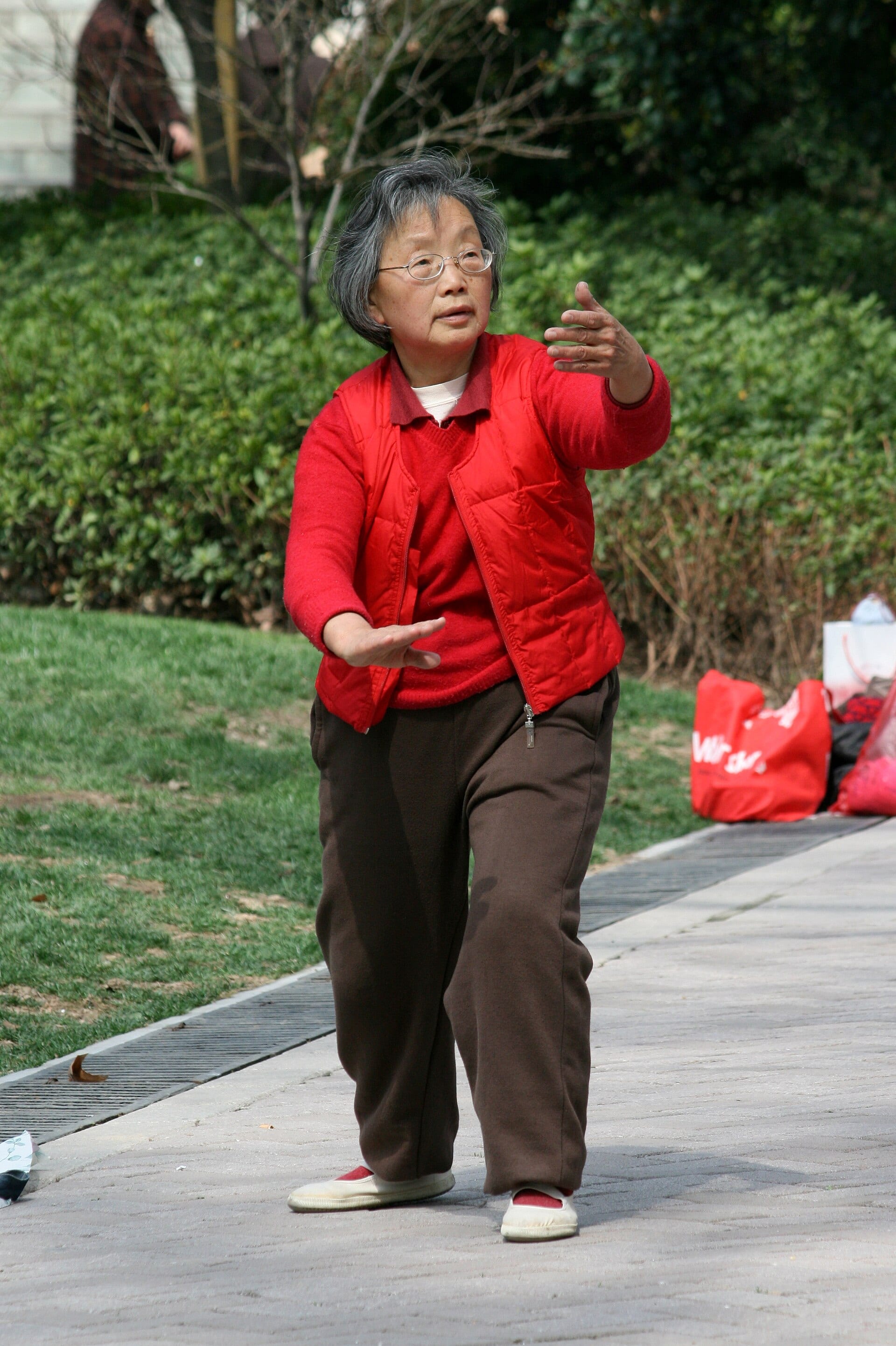
Most studies of activity and mood compare people with each other: the active versus the less active. A new study from China asks a more personal question. When someone moves more than they usually do, do they feel better than they usually do a few months later?
The study, by Xu, Zhu, Chen, Hu and Xu at universities in Fujian, Hunan and Jiangxi, was published on November 5 in Frontiers in Public Health. Its answer is a modest yes, with caveats the authors spell out.
The setup
China has a large network of senior education institutions, sometimes called universities for older people, where older adults enroll in organized classes. The researchers worked with nine of them in Jiangxi, Guizhou, Fujian and Hunan provinces and picked registered learners at random from their lists.
In all, 1,392 people aged 60 and over took part. Their average age was 67.7, a little over half were women, and most lived in rural areas. They filled in paper questionnaires three times in 2025: in March, July and December. 1,137 completed all three rounds.
Activity was measured with a short questionnaire that combines how hard, how long and how often people exercise into a score from 0 to 100. Distress was measured with a standard 21-item questionnaire covering low mood, worry and tension, added up into one total.
Comparing people with themselves
The analysis used a model designed to separate two things: lasting differences between people, and each person's ups and downs around their own usual level. That matters because people who are generally more active may also differ in many other ways. Looking at changes within the same person removes some of those differences.
When participants reported more activity than was typical for them, they reported lower distress than was typical for them at the next round, four or five months later. The effect was modest but appeared in both intervals, with standardized coefficients of about 0.10 and 0.13.
The reverse direction was less tidy. Higher-than-usual distress was not clearly followed by a change in activity in the first interval, and was followed by slightly more activity in the second. The authors read this as a more variable link in that direction.
Women reported somewhat higher distress on average. Average activity barely changed over the year.
What to keep in mind
Everything was self-reported, so the same reporting habits could shape both answers. Participants came from only nine institutions, and the analysis could not account for people at the same institution being similar, which may make the results look more certain than they are. The authors did not adjust for multiple comparisons. People who choose to attend classes in later life may also differ from other older adults. This is an observational study, so it shows a sequence, not cause and effect.
The study was funded by Hunan provincial science and education programs, and the authors declared no competing interests.
Where Soma fits
What we like here is the framing: comparing you with your own usual level, not with someone else. Soma does not measure distress or mood. The Soma app, not yet available, will read data your phone and watch already store in Apple Health. Its Mind score reads heart rate variability, resting heart rate and breathing, and activity data sits alongside it, so you can see how your own weeks compare with your own baseline.
Sources, as of November 7, 2026: Xu, Zhu, Chen, Hu and Xu, "Physical activity and psychological distress among older adults in China: a three-wave random-intercept cross-lagged study," Frontiers in Public Health, doi 10.3389/fpubh.2026.1921562, published under CC BY 4.0. This post describes research and isn't medical advice.