Sleeping on a different clock at weekends went with slightly more body fat in Korean adults, but the link was fragile
In a national Korean survey with body scans, adults whose weekend sleep ran two hours or more off their weekday schedule had about 0.8 points more body fat. The signal faded under stricter analyses.
Soma Labs3 min read
Many people sleep on one schedule during the week and another at weekends. Researchers call the gap "social jetlag": the difference between the middle of your sleep on weekdays and the middle of your sleep at weekends. A new study from Korea asked whether that gap shows up in body fat measured with a scanner, rather than in weight or waist size.
The paper, by Kim and Bae, was published on November 5 in PLOS One. It reports a small association that held in the main analysis and weakened in stricter ones. Both halves of that result matter.
The setup
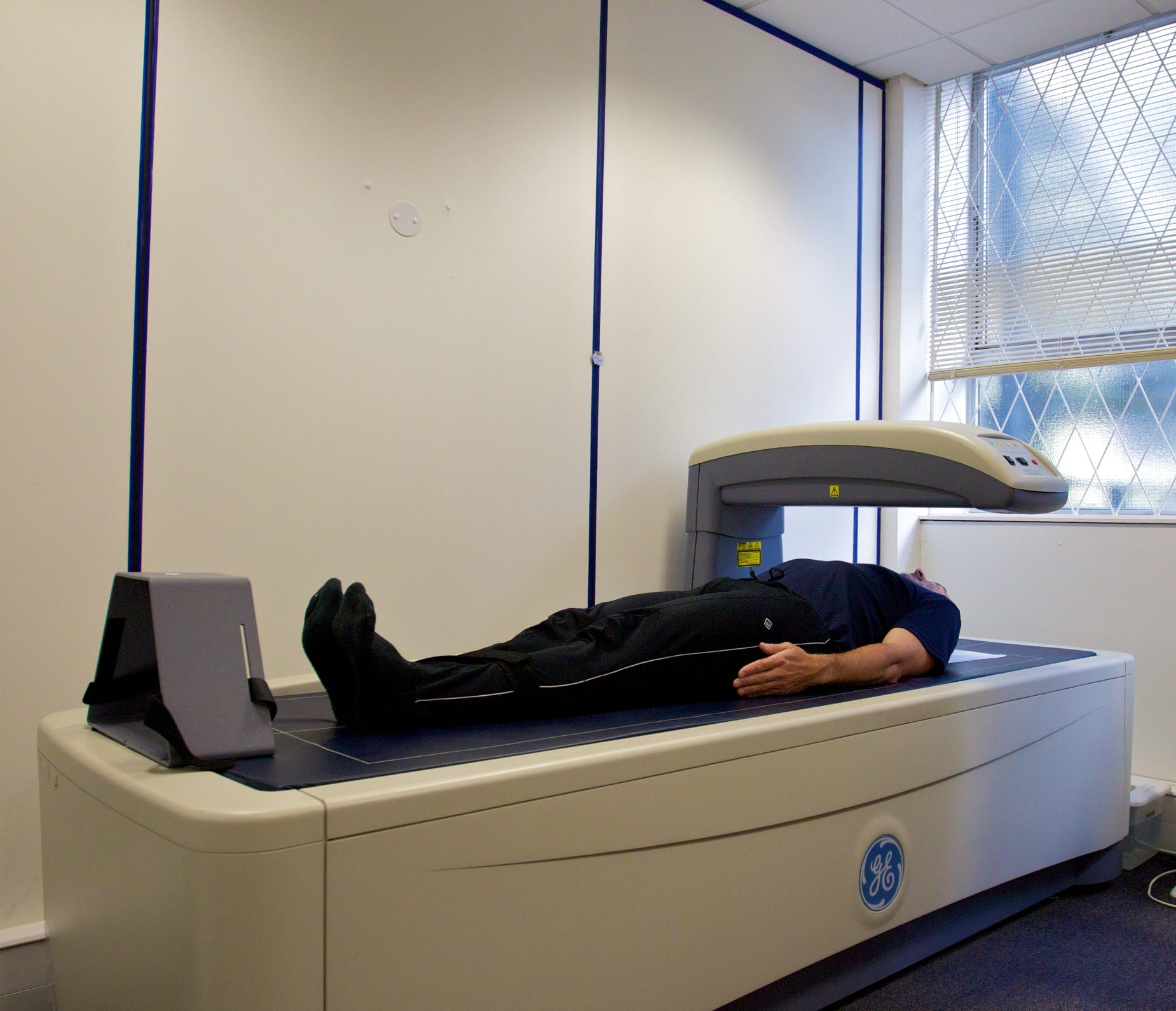
The data come from the 2024 Korea National Health and Nutrition Examination Survey, a nationally representative survey run every year in Korea. In 2024 it included whole-body DXA scans, a low-dose X-ray method that estimates how much of the body is fat, for adults aged 40 and over.
Participants reported their usual bedtime and wake time separately for weekdays and weekends. From those answers, the authors computed the midpoint of sleep for each and took the difference. Of 4,483 adults with usable sleep answers, 74.3% had a gap under one hour, 19.7% had one to two hours, and 267 people, or 6.0%, had two hours or more.
The two-hour group slept less on weekdays and more at weekends: 6.64 hours on weekdays against 8.68 hours at weekends, compared with 7.27 and 7.50 hours in the group with the smallest gap. Scan results were available for 3,023 people.
What the study found
After adjusting for age, sex, sleep duration, socioeconomic status, lifestyle habits and other factors, people with a gap of two hours or more had 0.81 percentage points more total body fat than everyone else. Trunk fat was 1.01 points higher. Body mass index and waist size showed no difference.
Treated as a continuous measure, each extra hour of gap went with 0.25 points more total body fat. The one-to-two-hour group did not differ from the group under one hour. The association looked clearer in people aged 40 to 64 than in those 65 and older, which the authors note fits the idea that weekday and weekend schedules mean more for people who still keep a working week.
Why it is fragile
The authors are candid about the limits. Before adjustment, body fat did not differ across the three groups at all. The gap appeared only once age and sex were accounted for, so the result depends on how the model is built.
Two stricter checks also weakened it. Adjusting for an estimate of each person's natural sleep timing shrank the total body fat difference to 0.61 points, no longer statistically significant. Recalculating the gap in a way that strips out weekend catch-up sleep made the association disappear. The authors conclude that the usual measure may partly reflect people repaying weekday sleep debt at weekends, not only a clash between body clock and calendar.
The study is cross-sectional, so it cannot show which came first. Sleep times were self-reported, with no wrist devices. Weekdays and weekends stood in for work days and free days, which fits retirees poorly. The differences are small, and the authors call for longer studies with measured sleep, meal timing and work schedules. The study received no specific funding, and the authors declared no competing interests.
Where Soma fits
What we take from this is that a single number like weight can hide what is going on, and that a sleep habit is easier to describe well when it is recorded rather than recalled. Soma does not measure body fat or body clock type. The Soma app, not yet available, will read the sleep and heart data that your phone and watch already store in Apple Health, so you can see your own weekday and weekend patterns side by side instead of estimating them from memory.
Sources, as of November 6, 2026: Kim and Bae, "Social jetlag and DXA-derived adiposity in Korean adults," PLOS One, doi 10.1371/journal.pone.0362068, published under CC BY 4.0. This post describes research and isn't medical advice.