An extra "ultraprocessed" label helped Chilean parents spot it, mostly on packs that had no other warning
In a preregistered online trial with 3,519 parents in Chile, adding an "ultraprocessed" octagon to the country's nutrient warning labels made parents more likely to call a pack of chips ultraprocessed and a little less keen to buy it. The effect shrank as the pack carried more warnings.
Soma Labs3 min read
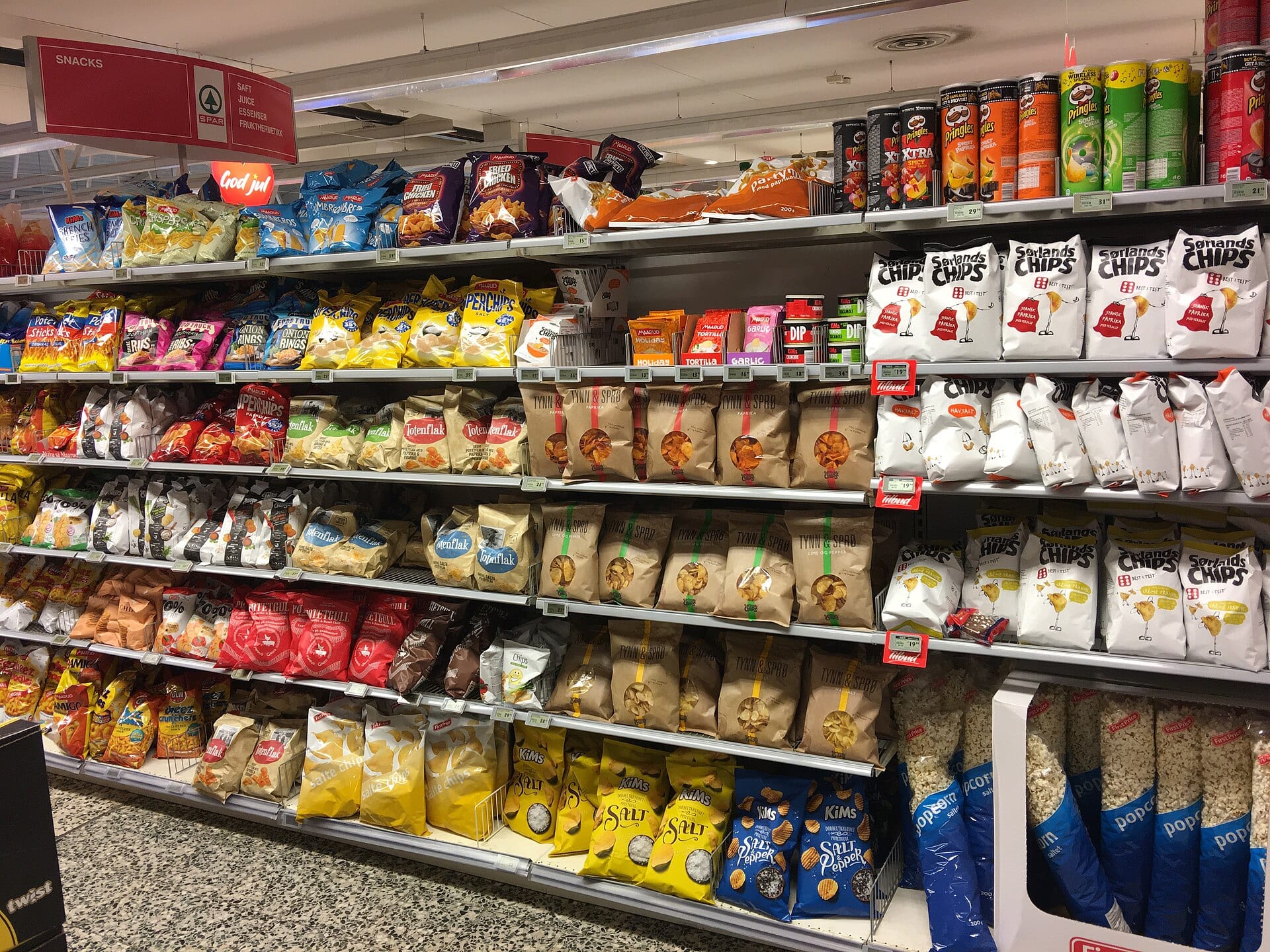
Since 2016, Chile has put black octagons on packaged food. Each one says the product is high in something, such as sodium, sugar or saturated fat. A food can be heavily processed and still high in none of those things. Then it gets no octagon at all.
A new randomized trial in Frontiers in Nutrition tested one answer: an extra white octagon that simply says "ULTRAPROCESSED." The team, from the University of North Carolina at Chapel Hill and the University of Chile's nutrition institute, registered the trial before collecting data.

The setup
In July and August 2025, the researchers recruited 3,519 Chilean parents through an online survey panel. Each had a child aged 2 to 14. The team set a quota so that half the sample had a high school education or less. Their average age was about 40, and 70% were women.
Each parent was randomly shown one of two versions of the same three bags of potato chips. The bags were fictitious, so no brand loyalty got in the way. All three had the same flavor. One bag was high in no nutrient of concern, one in one, and one in two.
Half the parents saw only Chile's usual black octagons. The other half saw the same octagons plus the white "ULTRAPROCESSED" one. Before the task, everyone read a short definition of the term.
For each bag, parents answered three questions. Is this product ultraprocessed? How likely are you to buy it next week? How good or bad would it be to eat it every day?
What the label changed
The label helped most where Chile's current system says nothing. For the bag with no black octagon, parents who saw the new label were 12 percentage points more likely to call it ultraprocessed. For the bag with one octagon, the gain was 4 points. For the bag with two, there was no clear difference.
Purchase intentions dropped for all three bags, on a 1 to 5 scale. The drop was 0.32 points for the bag with no octagon, 0.23 for one and 0.20 for two. Ratings of how good the product was to eat every day fell by 0.33, 0.17 and 0.11.
The authors suggest a simple reason the effect shrinks. Many shoppers seem to count labels. Once a pack already carries two octagons, one more adds less.
The caveats
This was an online survey, not a store. Parents said what they would do, and nobody actually bought anything. The study used one kind of product, potato chips, so other foods may behave differently. Everyone in it was a parent recruited through a panel, not a random sample of Chileans. The effects on purchase intentions are modest, a fraction of a point on a five-point scale.
The trial was funded by Bloomberg Philanthropies, with support from the US National Institutes of Health and Chile's national research agency. The authors report no commercial conflicts.
Where Soma fits
We don't track what you eat, and we won't claim to. The Soma app, not yet available, will read the activity and sleep data your phone or watch already stores in Apple Health. What this study shows is something we try to keep in mind in our own design: people respond to clear, simple signals, and one more signal adds less once there are already several. We would rather show you a few numbers you trust than a crowd of badges.
Sources, as of November 5, 2026: D'Angelo Campos, Smith Taillie, Hall, Ng and Rebolledo, Frontiers in Nutrition, published under CC BY 4.0; trial registration NCT06842680. This post describes research and isn't medical advice.