Drinking during long workouts: clearer effects on the body than on the finish time
A meta-analysis in Frontiers in Nutrition pooled 24 randomised trials of drinking during endurance exercise. Fluid went with slightly lower core temperature and heart rate on average. A clear benefit to self-paced performance didn't show up, and the certainty was very low.
Soma Labs3 min read
How much to drink during long exercise is one of the most argued-over topics in endurance sport. A systematic review published on October 27 in Frontiers in Nutrition tried to separate what fluid does to the body from what it does to performance.
What was pooled
The authors, Zhang, Wang and Liu, searched six databases up to June 1, 2026, for randomised trials in healthy adults doing at least 60 minutes of continuous endurance exercise. They kept 24 studies. Together these reported 225 participants: 170 men, 20 women, and 35 whose sex wasn't reported. Twenty-one studies fed into the pooled comparisons.
They analysed each kind of outcome separately, rather than lumping performance and physiology together.
Fluid versus little or none
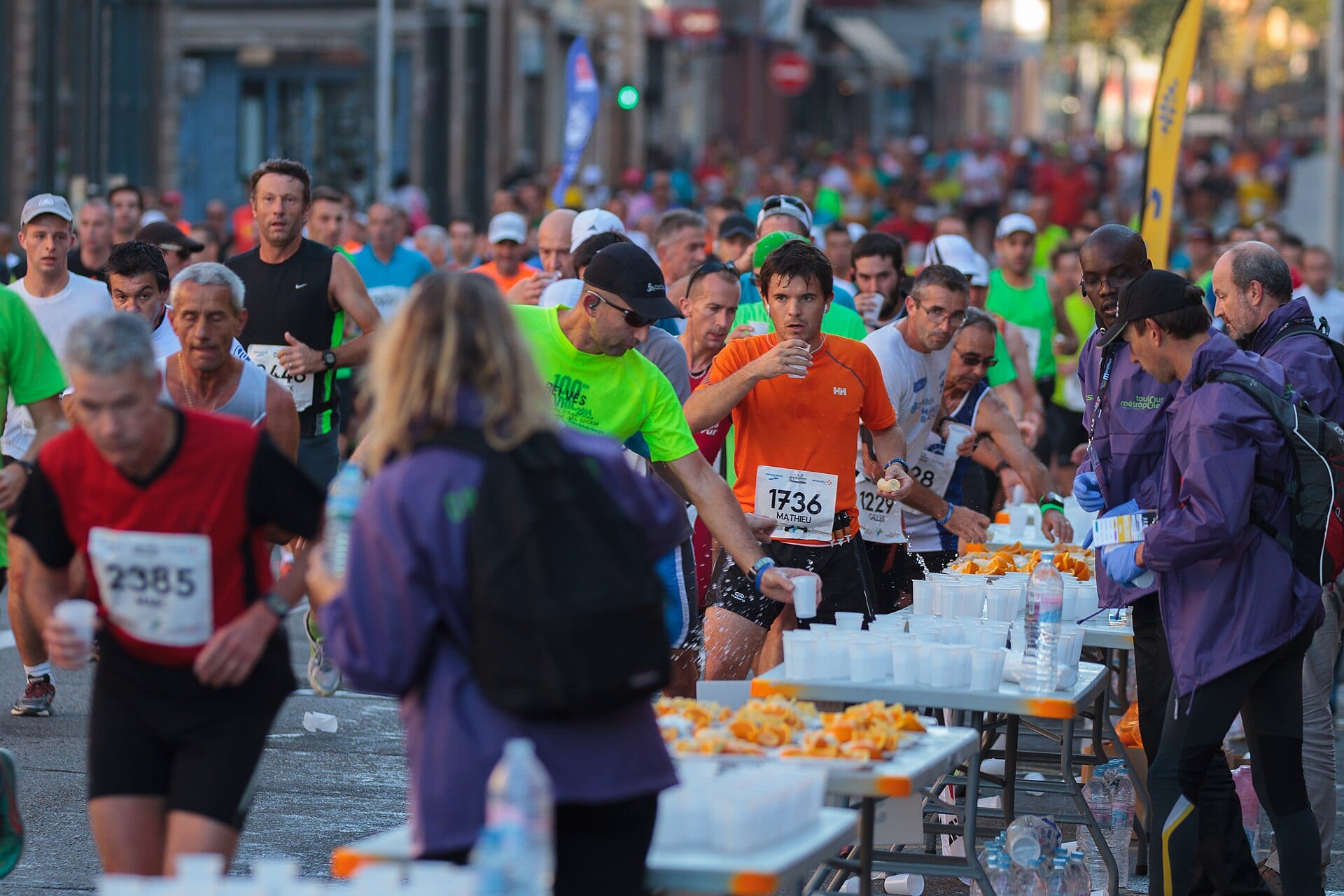
For self-paced performance, such as time trials or fixed-duration efforts, drinking showed no clear benefit over little or no fluid. The pooled difference was essentially zero, from four studies.
Tests where people exercise until they can't continue told a different story on average. Time to exhaustion was 34.1% longer with fluid. That came from only three studies and 21 people, and the range of plausible results included no benefit at all.
The body's responses were more consistent in direction. Drinking went with core temperature about 0.38 °C lower and heart rate about 6.8 beats a minute lower on average. Both results varied a lot between studies, and their prediction ranges also crossed zero.
Planned versus drinking to thirst
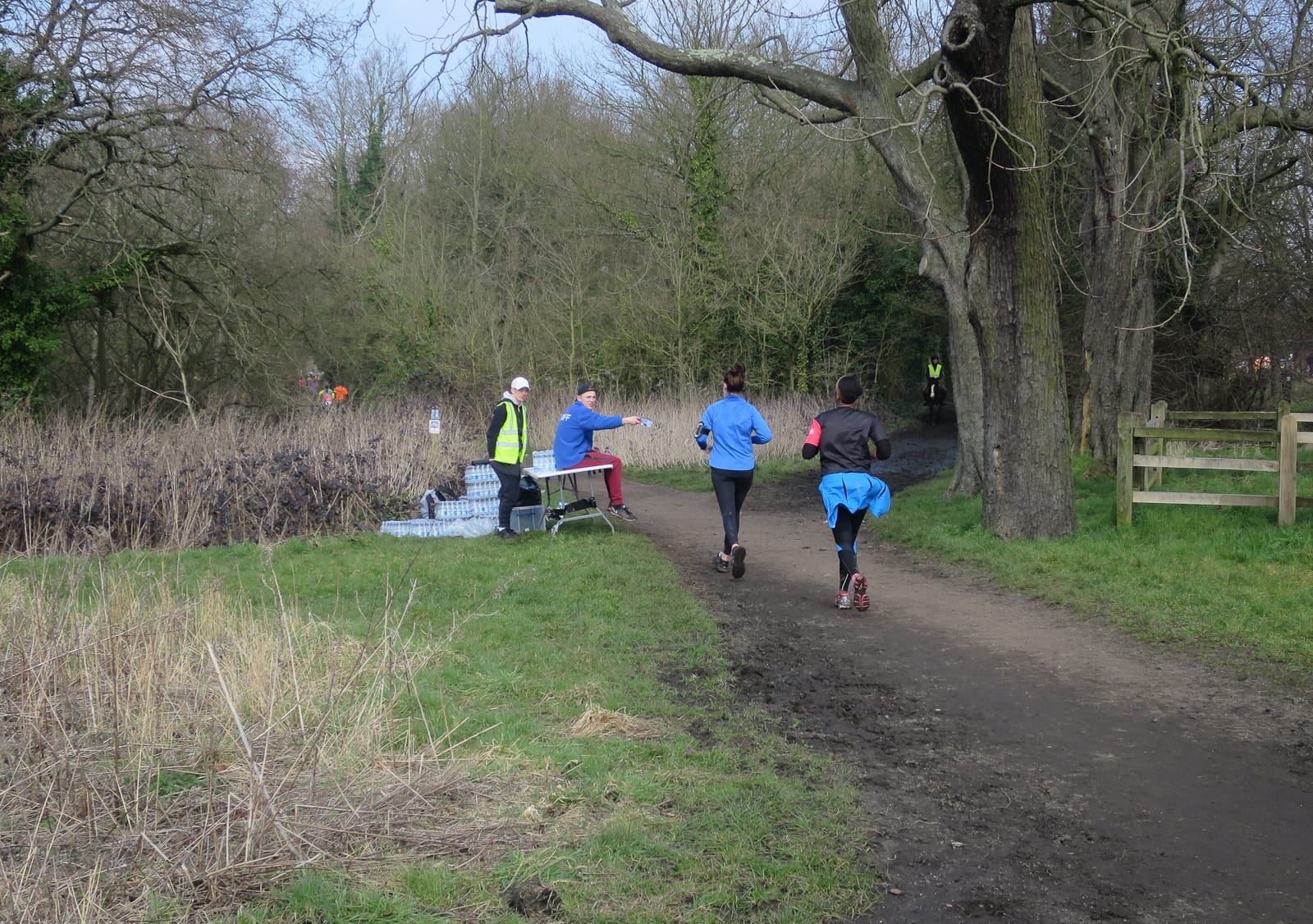
The review also compared planned or individualised drinking with drinking when people chose to. Planned drinking didn't clearly improve performance. It did reduce measured body-mass loss during exercise by about 1.5 percentage points, which the authors note is the expected result of simply drinking more.
Evidence on sodium was sparse.
How sure anyone can be
The authors rate every main estimate as very low certainty. The studies were small, mostly in men, and some analytical decisions were made after the fact. They conclude that the body's average responses favour drinking, but that the effect on self-paced performance, and the best amount of fluid or sodium, remain uncertain.
That split is the useful part. Lower heart rate and core temperature are measurable changes in the body. Whether they turn into a faster finish is a separate question, and the trials so far don't answer it.
Where Soma fits
This review is a good reminder that a change in a body signal and a change in an outcome you care about aren't the same thing. It takes careful, repeated measurement to tell them apart.
Soma is a general wellness product, not a medical device. It doesn't diagnose anything, and it doesn't measure hydration, core temperature or heart rate during exercise. Soma Axon, the pod we are still building, uses the same light, cameras and stance every week, and shows each value with its margin of error, so a change over time is easier to trust. We wrote more about that in The same instrument, every week.
Sources, as of October 29, 2026: Zhang, Wang and Liu, Frontiers in Nutrition, published under CC BY 4.0. This post describes research and isn't medical advice.