Older faces worked harder at rest and less in motion, in a small muscle study
A study in PLOS One placed sensors on nine facial muscles in 23 older and 20 younger adults in Japan. At rest, older faces showed more muscle activity. During deliberate movements, younger faces showed more.
Soma Labs3 min read
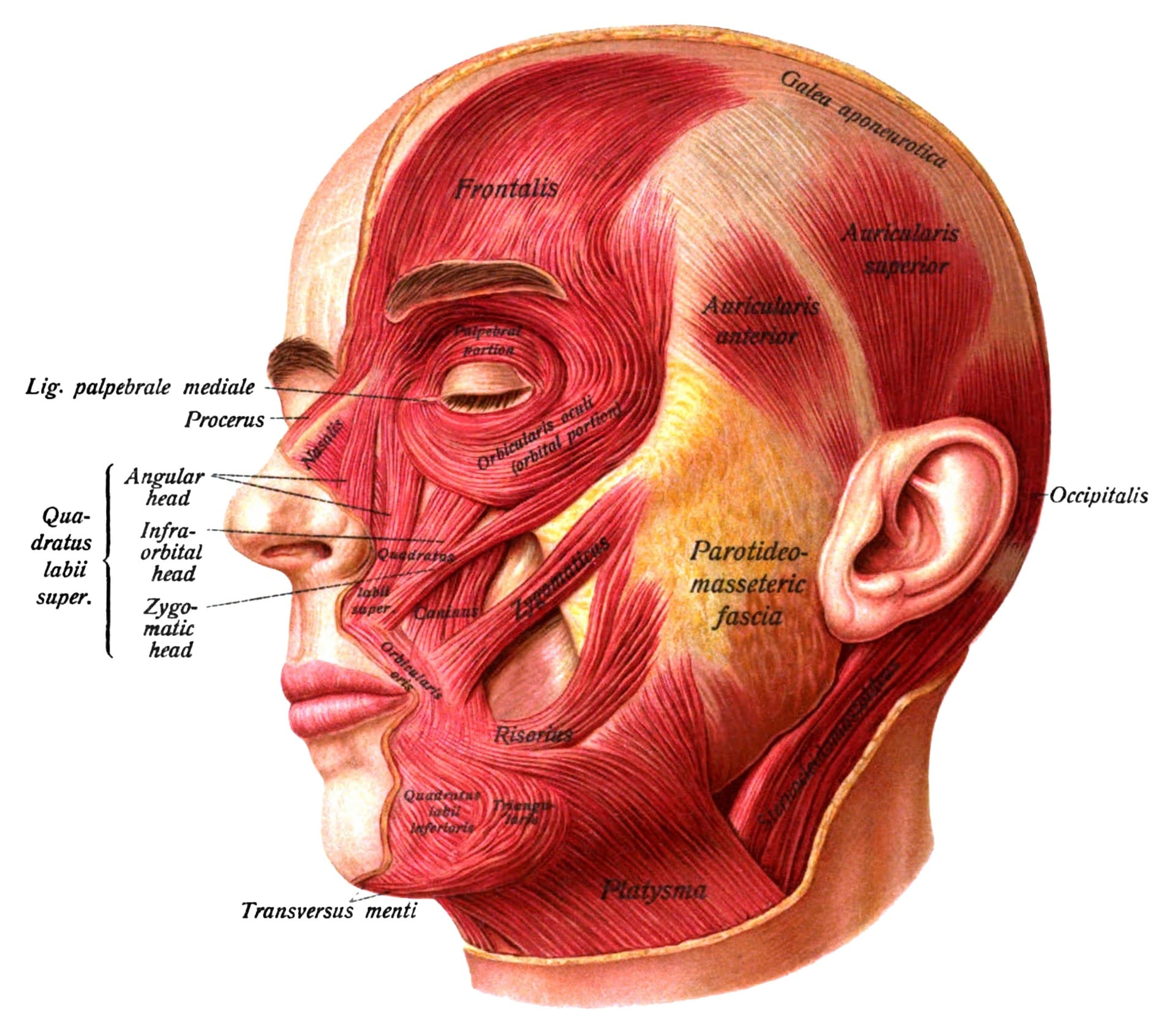
We usually think about the face in terms of skin. Underneath, a set of small muscles moves it all day, and they are hard to study because they sit so close together. A study published in PLOS One on October 21 measured those muscles directly, at rest and in motion, in older and younger adults.
How the faces were measured
The authors, Okamoto, Adachi and Mizukami, recruited 23 older adults and 20 younger adults in Japan, all living independently. The older group had a mean age of 72.5 and included 19 women. The younger group had a mean age of 21.0 and included 9 women. Measurements were taken in late 2023.
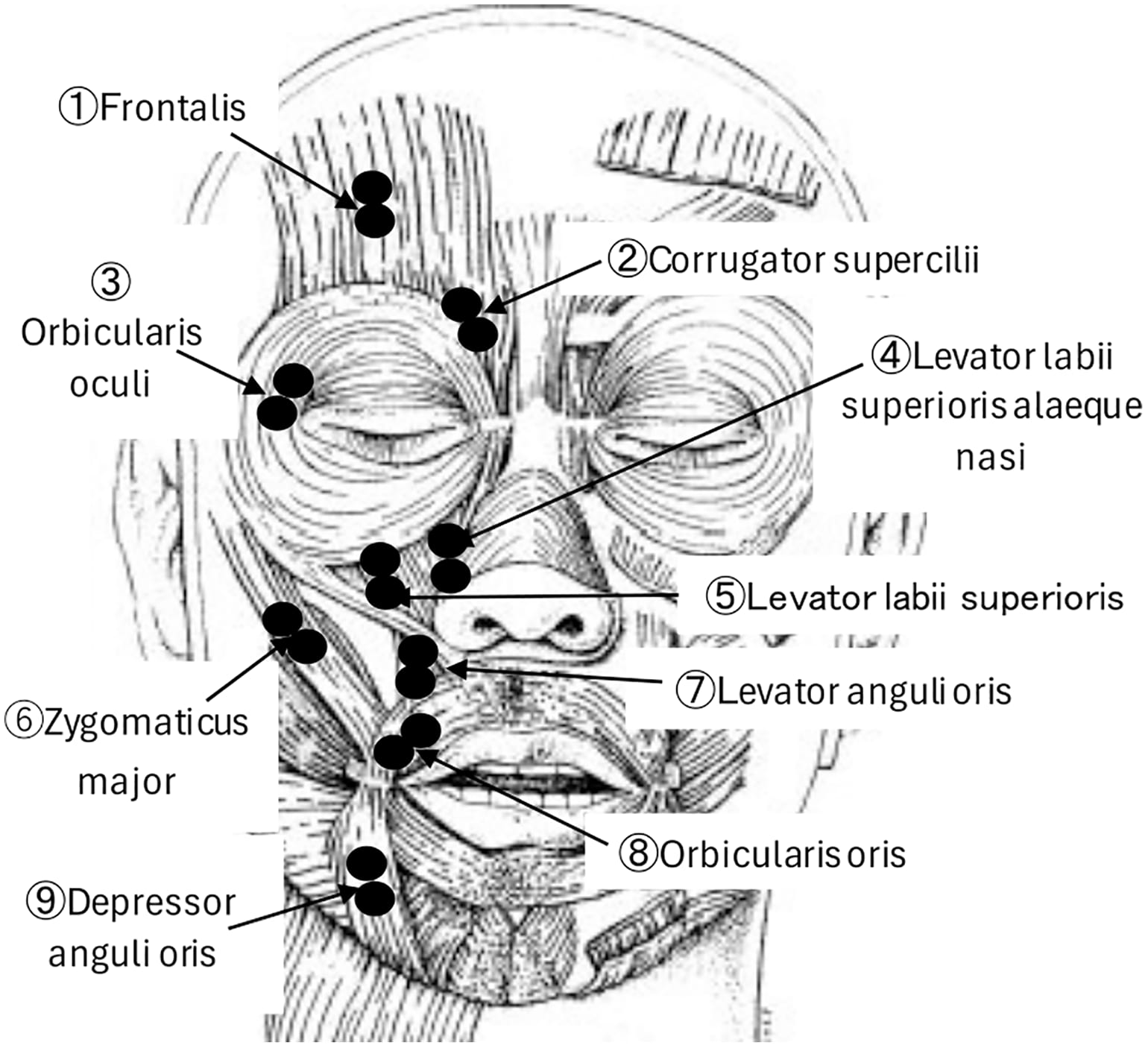
Each person had pairs of small surface electrodes placed over nine facial muscles, from the forehead to the corners of the mouth. They then did ten tasks while being filmed: one relaxed, neutral face, and nine deliberate movements, such as raising the eyebrows, closing the eyes tightly or lifting the corners of the mouth into a broad smile. Each movement was held for five seconds.
At rest, older faces were busier
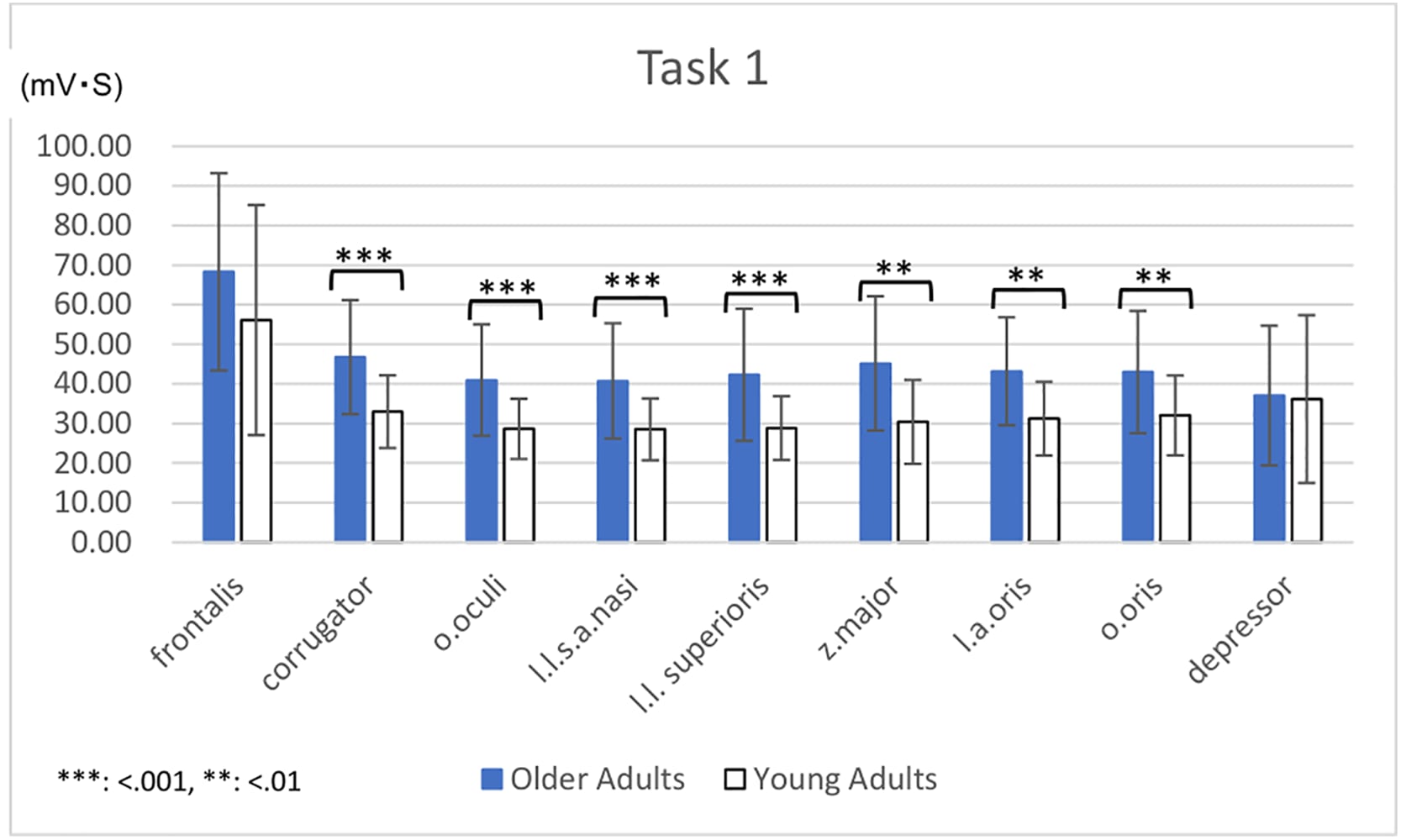
With a relaxed, neutral face, the older group showed higher muscle activity in seven of the nine muscles. Only the forehead muscle and one muscle that pulls the mouth corners down showed no clear difference.
The authors offer some possible reasons, including age-related changes in how muscle tone is regulated. They are careful to call these possibilities. Surface readings don't measure muscle strength or mass directly, and they can be affected by the tissue between muscle and skin.
In motion, younger faces did more
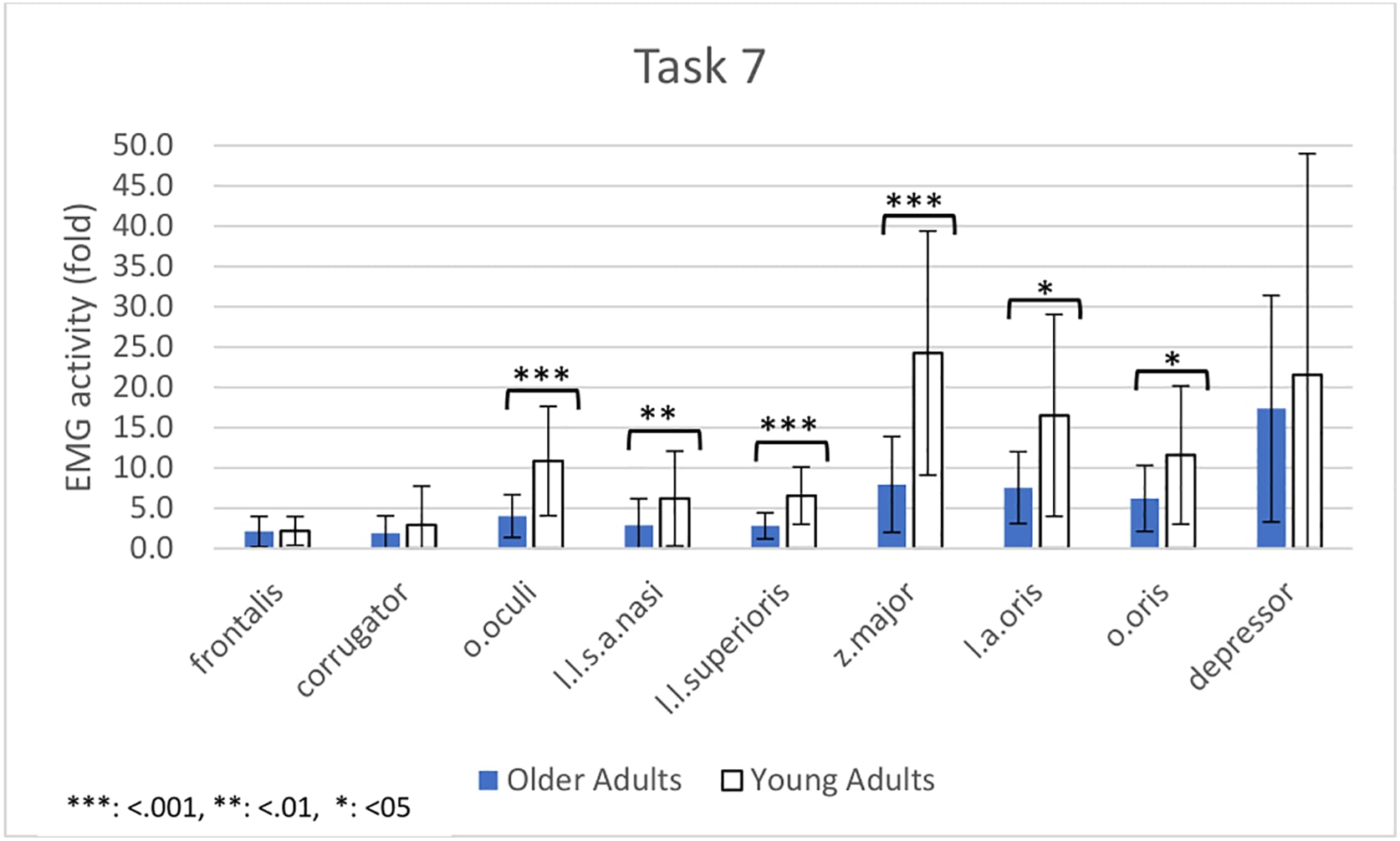
For the deliberate movements, each value was scaled against the person's own resting level. On that measure, the younger group showed more activity in seven of the nine muscles. For the forehead, the average was 10.23 in the younger group against 4.60 in the older group. Two muscles around the mouth showed no clear difference.
What the study can't settle
This is a small, one-time snapshot. With 43 people, the results point in a direction but don't define what is typical for an age.
The authors list the limits themselves. Effort during each movement couldn't be measured objectively. Each task was done once, so trial-to-trial variation is unknown. The older group was mostly women, while the younger group was more balanced. Electrodes on the face may change how people move. And because older adults had higher resting activity, scaling against rest may have widened the gap seen during movement.
Where Soma fits
The part we find useful is the split between rest and motion. The same face can look different depending on whether you catch it relaxed or moving, which is one reason a consistent setup matters when you compare one week to the next.
Soma is a general wellness product, not a medical device. It doesn't diagnose anything, and it doesn't measure muscle activity. Soma Axon, the pod we are still building, uses the same light, cameras and stance every week, and shows each value with its margin of error, so a change over time is easier to trust. We wrote more about that in The same instrument, every week.
Sources, as of October 25, 2026: Okamoto, Adachi and Mizukami, PLOS One, published under CC BY 4.0. This post describes research and isn't medical advice.