A saliva age clock held up in 898 women, but its extra signals faded once age was set aside
A study in Biomedicines retested a 10-marker saliva epigenetic clock in an independent group of women. It tracked chronological age closely, with errors that grew at the youngest and oldest ages. Links to everyday questionnaire answers did not survive once age itself was accounted for.
Soma Labs3 min read
Epigenetic clocks estimate age from chemical marks on DNA. Some are now sold as tests that promise to show whether you are ageing faster or slower than the calendar. A study published on October 30 in Biomedicines asked two plain questions about one such clock, built from saliva. Does it still work in a new group of people? And do its extra signals mean anything once you account for age?
What was tested
The authors, Collins and Chung, took a set of 10 DNA markers that an earlier study had picked out in a mixed group of men and women. They tested it in 898 women, aged about 12 to 85, with no overlap with the original group. They recalibrated the clock for this group and checked it with cross-validation, so each estimate came from a model that hadn't seen that person.
They also compared the clock's results with 23 broad questionnaire items about health and daily life.
How closely it tracked age
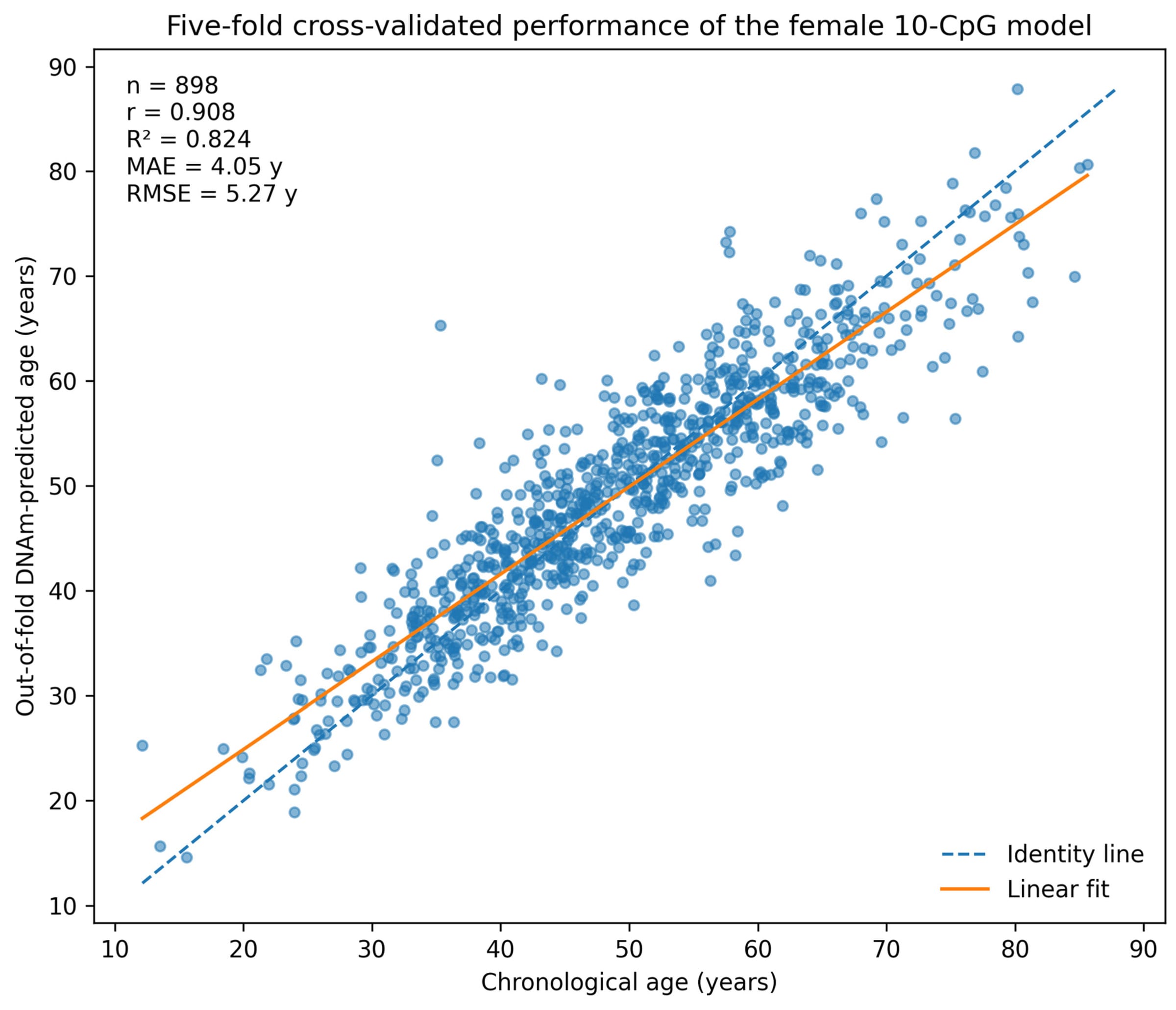
The clock followed chronological age closely. The correlation was 0.908, and the clock explained about 82% of the variation in age. On average, its estimate was off by 4.05 years.
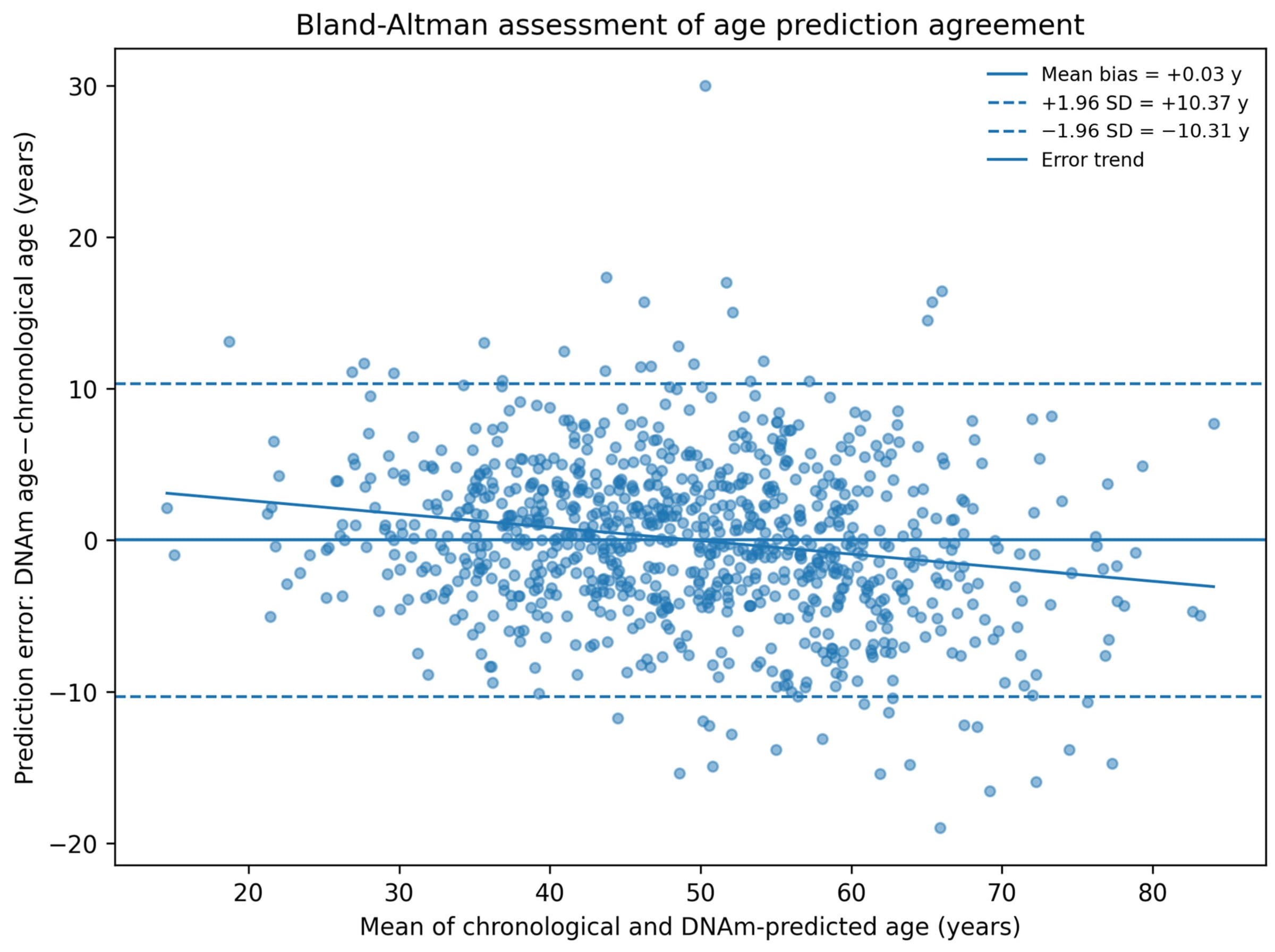
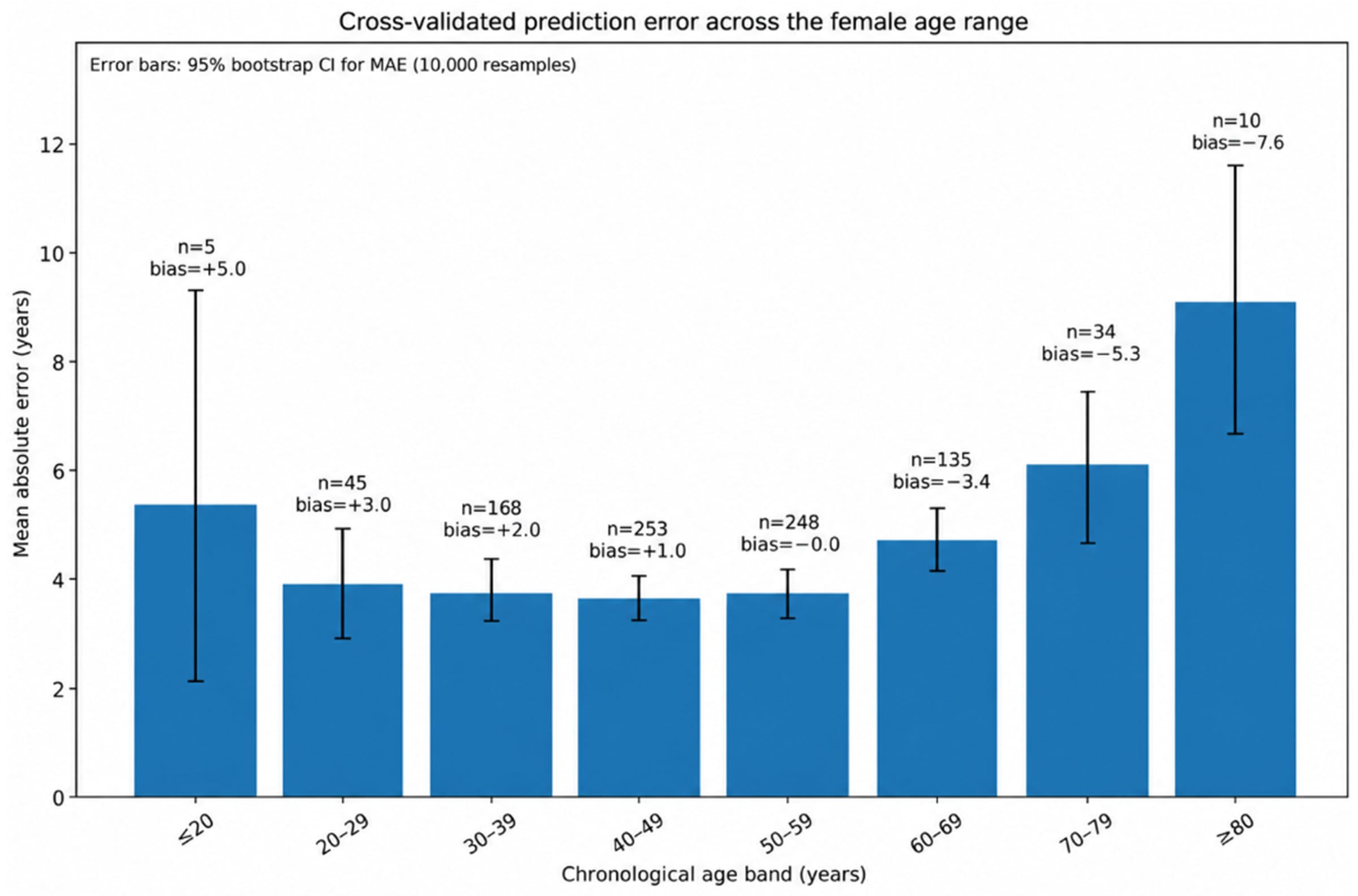
Average error hides the spread, though. For a single person, the clock could land roughly 10 years above or below their actual age. And the error wasn't even across ages. It was smallest in the middle decades and larger at the edges. In the 10 women aged 80 or older, the clock read 7.6 years young on average. In the five aged 20 or under, it read 5.0 years old.
The extra signals
This is the more important part. Before adjusting for age, some questionnaire answers seemed linked to the clock's estimate. That is expected, because older people report more of many things, and the clock mostly measures age.
Once the authors accounted for chronological age directly, none of the 23 questionnaire items kept a significant link with the clock. One sleep-related item showed a small association that disappeared after correcting for the number of tests.
The authors' conclusion is direct. Associations with a raw age clock can be strongly confounded by age itself, and this data didn't support robust links once that was handled.
What it doesn't cover
The study included only women, and few at the youngest and oldest ages. It also relied on broad questionnaire items rather than detailed measures. And the cell-type analysis of the saliva samples was descriptive, not a full adjustment.
Where Soma fits
The lesson for anyone looking at an age number is to ask what it adds beyond the calendar. Here, the clock was good at telling age and showed little extra once age was set aside.
Soma is a general wellness product, not a medical device. It doesn't diagnose anything, and it doesn't measure DNA or biological age. Soma Axon, the pod we are still building, uses the same light, cameras and stance every week, and shows each value with its margin of error, so a change over time is easier to trust. We wrote more about that in The same instrument, every week.
Sources, as of October 30, 2026: Collins and Chung, Biomedicines, published under CC BY 4.0. This post describes research and isn't medical advice.