Three short stair climbs a day: spreading them out helped office workers stick with it
In a 12-week randomised trial with 135 office workers in China, people who spaced three short stair climbs across the workday completed slightly more planned days than people who did all three at once. The trial was never registered, and the authors say so.
Soma Labs3 min read
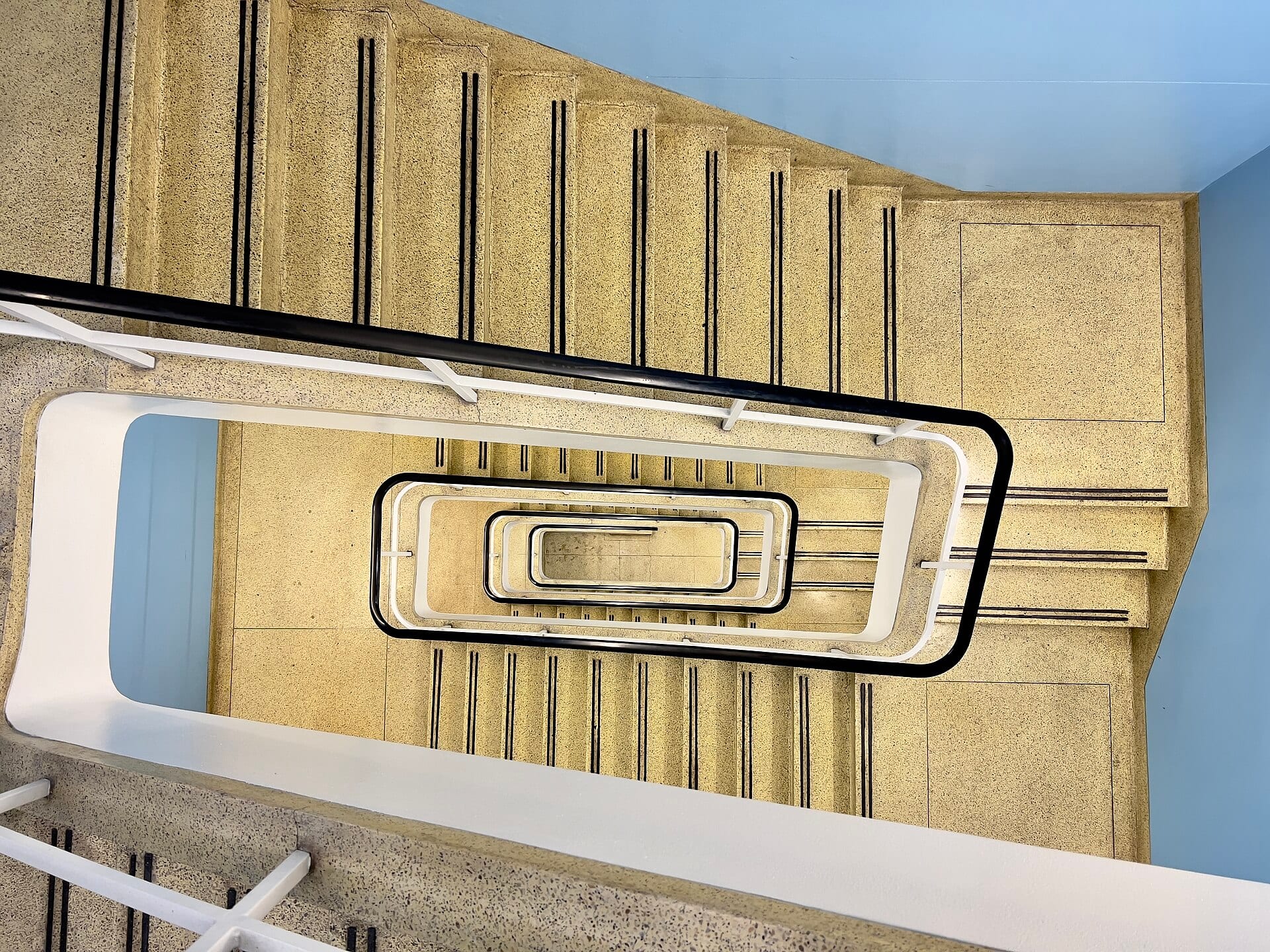
Exercise snacks are short bursts of effort fitted into the day. A flight of stairs is the classic example. The idea is appealing for anyone who sits for most of the workday. The practical question is how to schedule them so people keep doing them.
A trial published in Frontiers in Public Health on November 4 tested one version of that question. Lizhong Luo, KaiLin Mao, Xin Huang, Jiawen Zeng and Jineng Chen, from universities in Fujian, China, ran it at two office sites, recruiting participants in February and March 2026.

The setup
The team randomised 135 office workers aged 25 to 60. All sat for at least six hours a day and reported little physical activity. Fifty climbed stairs in a distributed pattern, 50 in a concentrated pattern, and 35 kept their usual routine as a comparison.
Each climb was 56 steps, about nine metres of height, at a fast but safe pace of the person's choosing. Both stair groups did three climbs a day, four workdays a week, for 12 weeks. That made 48 planned days.
The distributed group spread its three climbs across the day, one in the morning, one around midday and one in the afternoon, at least two hours apart. The concentrated group did all three in one session, with about two minutes of rest between climbs.
What changed
The main outcome was simple: on how many of the 48 days did people complete all three climbs as planned? The distributed group managed 76.3% of days. The concentrated group managed 71.1%. The difference was 5.2 percentage points, or about two and a half more complete days over the 12 weeks.
The climbs also felt different. In the distributed group, effort ratings and climb times rose less from the first climb of the day to the last.
At week 12, the team ran some exploratory checks. The distributed group walked two kilometres about 16 seconds faster than the comparison group, after adjusting for starting times. Heart rate came down a little faster one minute after the walk in both stair groups, by about two beats per minute more than in the comparison group. There were no clear changes in body weight, body fat, waist, resting blood pressure or blood measures.
The caveats, in the authors' own words
This trial was never registered in a public trial registry before it began. The authors say plainly that they thought ethics approval was enough, and that this limits independent checking of their plan. We think that matters, and we want readers to weigh the results with it in mind.
There are other limits. Climbs were recorded on paper logs. Staff checked about one in ten in person, and the logs matched what staff saw 96.9% of the time. Neither participants nor staff could be blinded, since the schedules were visibly different. The comparison group got no attention to match the stair groups. And the walking and heart-rate results were exploratory, without correction for testing many outcomes.
No serious events were reported. The authors conclude that spreading the climbs out improved adherence by about five percentage points, and that this does not yet show the approach is practical or safe at scale.
Where Soma fits
Soma is a general wellness product, not a medical device, and nothing here is advice to start or change an exercise routine. What we notice is that the hardest part of this trial was measuring what people actually did, day after day. The Soma app, which isn't available yet, is being built to read what your phone and watch already record in Apple Health. Soma Axon, the pod we are still building, uses the same light, cameras and stance every week, and shows each value with its margin of error, so a change over time is easier to trust. We wrote more about that in The same instrument, every week.
Sources, as of November 4, 2026: Luo, Mao, Huang, Zeng and Chen, Frontiers in Public Health, published under CC BY 4.0. This post describes research and isn't medical advice.