In 16,068 older adults in China, a varied plate went with a slower decline
A ten-year analysis in Frontiers in Nutrition tracked eight everyday foods and a WHO measure of physical and mental capacity. Variety in later life lined up with a slightly slower slide, with clear limits on what the data can show.
Soma Labs3 min read
Researchers who study ageing often look at one number at a time: grip strength, memory, walking speed. The World Health Organization proposed a broader idea called intrinsic capacity. It combines several physical and mental abilities into one picture of how well someone is holding up.
A study published in Frontiers in Nutrition on November 2 asked whether the variety in older adults' diets tracked with that picture over ten years. The authors, at the Third People's Hospital of Yunnan Province in Kunming, used the Chinese Longitudinal Healthy Longevity Survey. Their sample was 16,068 adults aged 65 and over, followed from 2008 to 2018.
Eight foods, counted by frequency
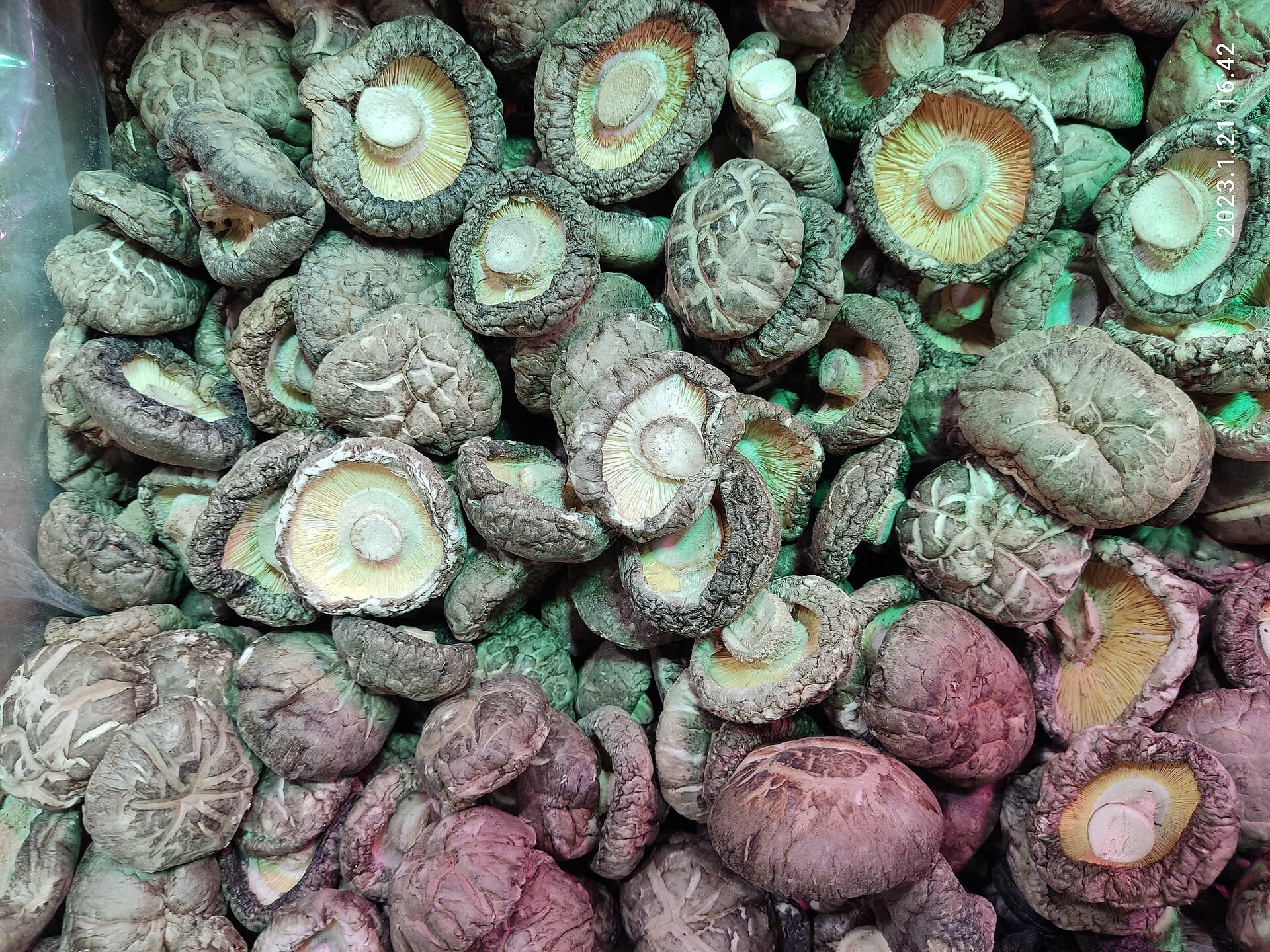
The diet measure was simple. People said how often they ate eight kinds of food: fish, legumes, garlic, dairy, nuts, mushrooms or algae, eggs, and tea. Only how often was recorded, not how much.
They were asked twice. Once about their current diet in 2008, and once, from memory, about how they ate around age 60. That let the team sort people into four groups: those whose score stayed high, rose, fell, or stayed low.
Intrinsic capacity was scored from 0 to 5. It covered five areas: thinking, mood and outlook, getting around, body weight as a sign of vitality, and self-rated vision and hearing.
A slightly slower slide
Everyone's score drifted down over the years. The question was how fast.
People whose diet stayed varied lost about 0.0185 points a year. People whose diet stayed narrow lost about 0.0289 points a year. That difference was statistically significant, with a p-value of 0.028. The groups whose diet rose or fell between midlife and late life weren't clearly different from the stable varied group.
The team also let the data form its own diet groups. In one model, the most varied group declined about four times more slowly than a group that ate mostly garlic and eggs. In another, it declined about eight times more slowly than the least varied group. In plain numbers, those are still small yearly changes on a five-point scale.
Survival followed a similar pattern. By 2018, about 30% of the most varied group had died, compared with about 48% of the narrowest group. Late-life diet showed this link more clearly than the recalled midlife diet.
What the study can't say
The authors are careful here, and so are we. This is an observational study, and they state that the associations aren't causal. Their own check on hidden factors, called an E-value, was small, at about 1.30. That means a modest unmeasured factor could explain the link.
Diet was counted by frequency, with no portion sizes and no energy totals. The midlife diet came from memory, sometimes decades later. And once deaths were accounted for, no diet group predicted who would newly fall below the capacity threshold. The results come from older adults in China and may not carry over elsewhere.
Where Soma fits
Soma is a general wellness product, not a medical device. It doesn't diagnose anything, Soma doesn't measure what you eat or intrinsic capacity, and nothing here is dietary advice. What stands out to us is the outcome the researchers chose: not one number, but several abilities tracked together over years. Soma Axon, the pod we are still building, uses the same light, cameras and stance every week, and shows each value with its margin of error, so a change over time is easier to trust. We wrote more about that in The same instrument, every week.
Sources, as of November 2, 2026: Cun, Xia, Chen and Zhang, Frontiers in Nutrition, published under CC BY 4.0. This post describes research and isn't medical advice.